
Top 10 Carbon Accounting Platforms in the Middle East
Evaluating regulatory alignment, supplier engagement, and decarbonization capabilities in the Middle East

Published:
The Middle East’s carbon accounting landscape is evolving quickly, with growing regulatory pressure and increasing demand for Scope 3 visibility and supplier engagement.
This guide features a mix of global enterprise platforms and regional solutions, including Ahya Technologies, EcoVadis, Green Project Technologies, IBM Envizi, Microsoft Sustainability Manager, Net0, Persefoni, SAP Sustainability Footprint Management, Sweep, and Updapt.
The right platform depends on your maturity, regulatory exposure, and supplier complexity, with leading organizations moving beyond measurement toward procurement-led decarbonization and measurable Scope 3 reduction.
Carbon accounting across the Middle East has entered a new phase. Sustainability and climate disclosures are moving from voluntary reporting to increasingly structured, regulator-led expectations driven by capital market guidance, investor scrutiny, and multinational customer requirements.
At the same time, 79% of CEOs in the Middle East report having a sustainability strategy in place, and with Scope 3 emissions often accounting for the majority of corporate footprints, supply chain decarbonization is quickly becoming the primary lever for meaningful emissions reduction.
Recent regulations have also pushed Middle Eastern companies to act. Consider:
Below are ten leading carbon accounting platforms that can support organizations operating in the Middle East in 2026, presented in alphabetical order:
Ahya Technologies
EcoVadis
Green Project Technologies
IBM Envizi
Microsoft Sustainability Manager
Net0
Persefoni
SAP Sustainability Footprint Management
Sweep
Updapt
This list reflects a mix of global enterprise platforms and regionally focused solutions that are actively supporting carbon accounting and decarbonization programs in the Middle East.
The Top 10 Carbon Accounting Software Platforms in the Middle East
Platform | Pros | Cons | Best For |
|---|---|---|---|
Ahya Technologies | Regionally focused; easy to use; strong for early-stage programs | Limited advanced Scope 3 and enterprise-scale capabilities | Organizations in the Middle East starting their carbon accounting journey |
EcoVadis | Strong supplier engagement; large supplier network; procurement-friendly | Not a full carbon accounting system; requires complementary tools | Procurement-led Scope 3 engagement and supplier decarbonization |
Green Project Technologies | Strong Scope 3 and procurement workflows; supplier engagement at scale; action-oriented | May exceed needs for basic reporting; requires internal governance | Procurement-led Scope 3 programs with supplier engagement and action tracking |
IBM Envizi | Robust data management; audit-ready; strong for complex organizations | Heavier implementation; limited native supplier engagement | Large enterprises needing governance and multi-entity reporting |
Microsoft Sustainability Manager | Strong integrations; flexible; good within Microsoft ecosystem | Requires configuration; supplier engagement depth varies | Microsoft-centric organizations building sustainability data infrastructure |
Net0 | Balanced measurement and reduction; flexible; supports evolving programs | Supplier engagement depth may vary; less proven at enterprise scale | Organizations linking carbon accounting with decarbonization planning |
Persefoni | Investor-grade reporting; strong regulatory alignment; audit-ready | Heavier governance; supplier engagement may require add-ons | Organizations preparing for disclosure, assurance, and regulatory reporting |
SAP Sustainability Footprint Management | Deep ERP integration; strong product footprinting; scalable | Depends on SAP maturity; supplier engagement may require additional tools | SAP-centric organizations needing product and value chain insights |
Sweep | Strong Scope 3 workflows; action-oriented; modern UX | Integration depth varies; governance depends on setup | Organizations seeking balance of measurement, reporting, and reduction |
Updapt | Combines ESG and carbon reporting; accessible; structured workflows | Less advanced decarbonization and procurement features | Organizations managing both ESG reporting and emissions tracking |
1. Ahya Technologies
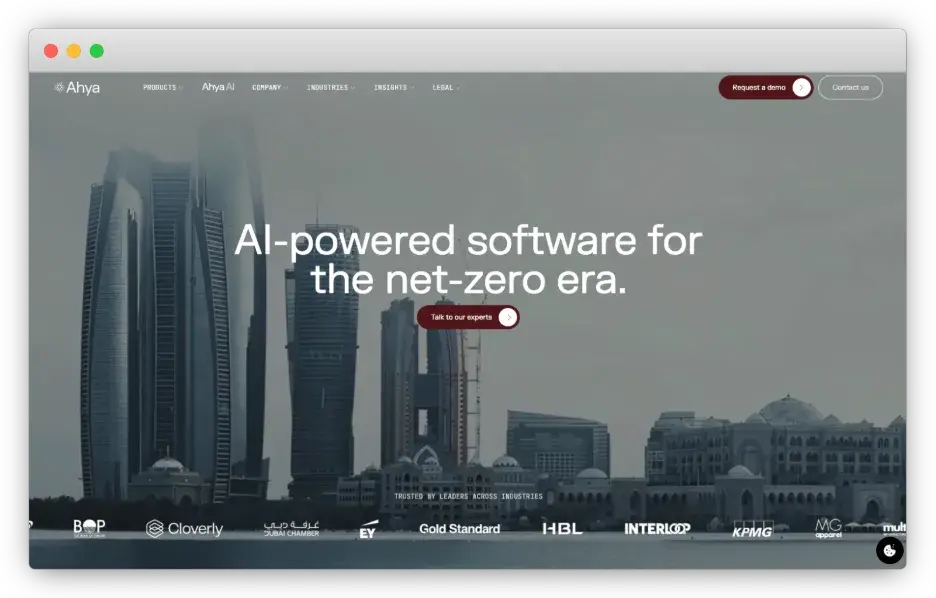
It is particularly relevant for financial institutions and finance‑exposed corporates because Ahya has been publicly recognized in relation to PCAF (Partnership for Carbon Accounting Financials) accreditation/partner activity, supporting financed emissions governance needs alongside corporate carbon management.
Core Features
AI-powered carbon management & accounting platform
PCAF-oriented workflows for financed emissions and portfolio governance
Dashboards and reporting workflows supporting audit and disclosure requirements
Support for Scope 3 improvement pathways
Pros
Region-relevant positioning and MENAP delivery footprint
Clear relevance for financial services / financed emissions governance
Potentially strong fit where local implementation support and regional context matter
Cons
May require complementary tools for advanced supplier engagement or large-scale Scope 3 programs
Less suited to highly complex, multi-entity enterprise environments
Best For: MENAP financial institutions and corporates seeking regionally relevant carbon accounting with PCAF-oriented capabilities and local proximity.
2. EcoVadis
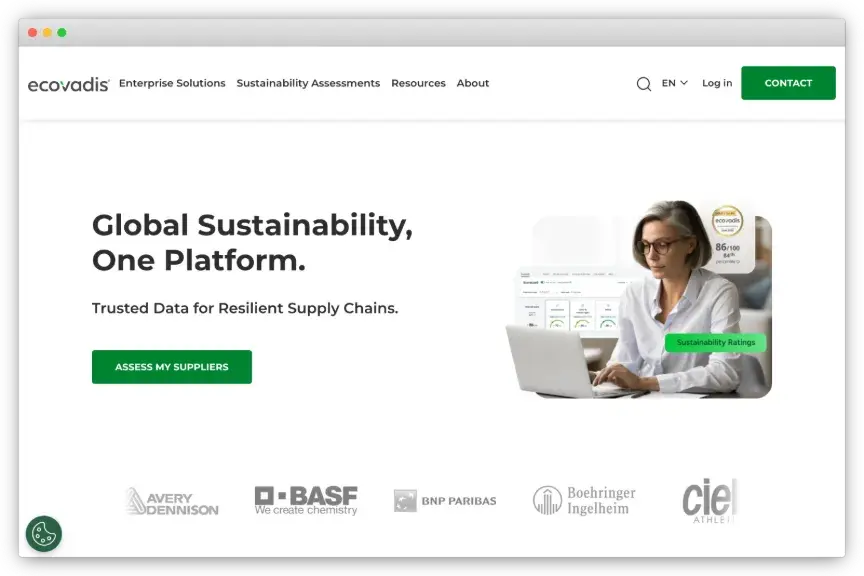
EcoVadis is often paired with a separate enterprise carbon accounting tool for Scope 1–2 and consolidated enterprise reporting, while EcoVadis is used to engage and mature the supplier base for Scope 3.
Core Features
Carbon Action Manager for supplier carbon engagement and carbon maturity insights
Tools to help suppliers generate emissions data (e.g., carbon estimators and readiness tooling)
Supplier dashboards and carbon heatmaps to identify hotspots across the supply base
Interoperability partnerships with carbon accounting providers (opt-in data sharing)
Pros
Procurement-friendly operating model focused on supplier engagement at scale
Large supplier network effects can reduce friction versus bespoke questionnaires
Useful for combining supplier ESG risk and carbon action in one workflow
Cons
Not a full end-to-end carbon accounting platform for corporate inventories and statutory reporting
Deeper product-level carbon footprinting and abatement pathway modeling may require complementary tools
Best For: Organizations prioritizing supplier engagement, scalable Scope 3 primary data collection, and procurement-led supplier decarbonization programs.
3. Green Project Technologies
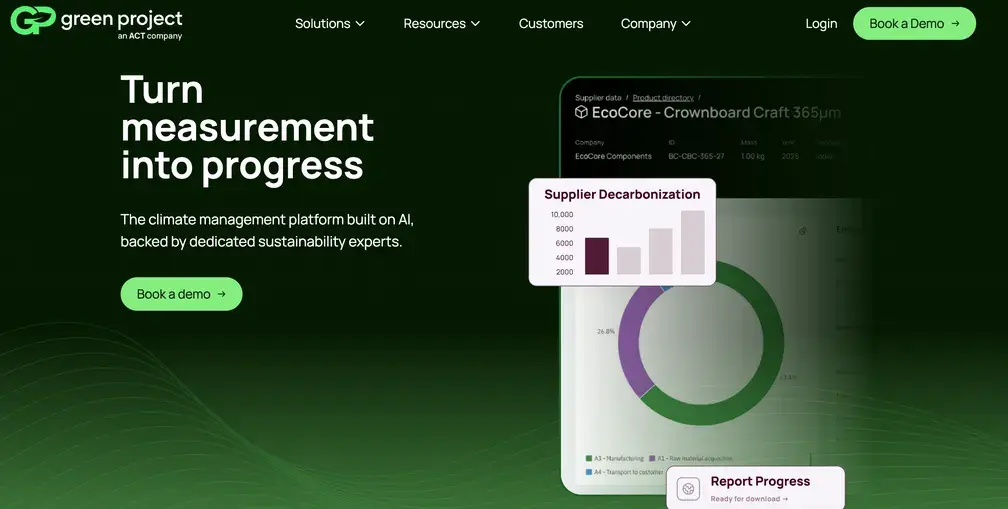
In 2025, Green Project Technologies acquired Emitwise’s Scope 3 software capabilities, bringing additional supply-chain emissions features under the Green Project platform.
Core Features
Enterprise-grade carbon accounting across Scope 1, 2, and 3 (account50)
Automated data collection and processing from 8,000+ utility providers (
Reporting alignment to common frameworks (e.g., GHG Protocol, CDP, SECR, CSRD, California SB 253)
Supplier-facing workflows for collecting and validating data and tracking progress
Supply chain decarbonization features such as supplier benchmarking and engagement campaigns
Pros
Strong Scope 3 and procurement workflow orientation (category, supplier and contract lens)
Designed to help move from data collection to supplier action and program execution Particularly relevant where supply bases include many SMEs needing enablement
Cons
End-to-end scope may exceed needs if you only want a basic corporate footprint inventory
As with any supplier engagement tool, success depends on internal governance and supplier onboarding capacity
Best For: Organizations seeking an integrated, procurement-led Scope 3 platform with structured supplier engagement and action tracking.
4. IBM Envizi
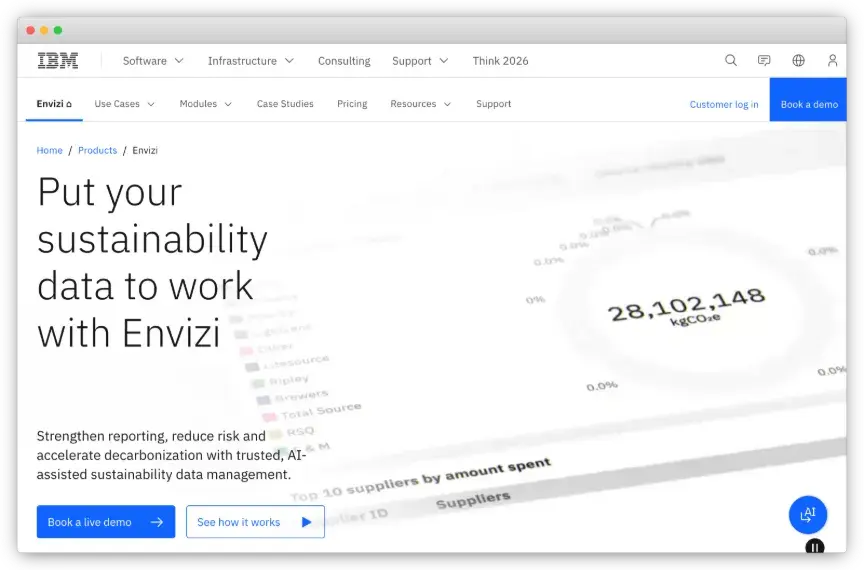
Envizi is often used by enterprises with complex, multi-entity structures that need strong governance, data lineage, and reporting automation across Scope 1–3.
Core Features
Centralized sustainability data management to create a single source of truth
Scope 1, 2, and 3 emissions accounting support
Configuration to align reporting with the GHG Protocol standards (including Scope 3)
API and integration options for automated data ingestion and reporting workflows
Pros
Strong fit for large enterprises with complex data environments and audit needs
Flexible configuration and integration capabilities
Well-suited to multi-site operations common in energy, industrials, and logistics
Cons
Implementation can be heavier than SMB-focused platforms
Supplier engagement typically benefits from complementary supplier tools or managed services
Best For: Large enterprises needing robust sustainability data management and governance across multi-entity operations, with Scope 3 expansion over time.
5. Microsoft Sustainability Manager
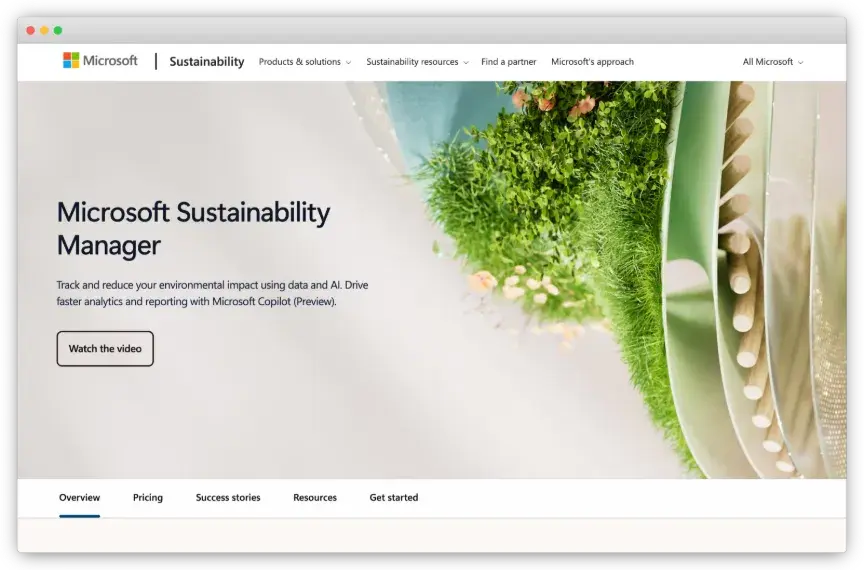
It includes capabilities to store activity data and calculate Scope 3 emissions, with emission factor libraries and support for custom factors where needed.
Core Features
Unified sustainability data model (Dataverse) to ingest environmental activity data
Capabilities to calculate Scope 3 emissions and store data for Scope 3 categories
Emission factor libraries plus support for custom emission factors
Product carbon footprint calculation capability (via product footprint features)
Pros
Good fit where Microsoft ecosystems are already embedded (Dynamics 365, Power Platform, Azure)
Strong extensibility and data integration patterns for enterprise data landscapes
Useful starting point for organizations standardizing sustainability data governance
Cons
Often requires partner implementation and configuration to fit specific sector methodologies
Supplier engagement depth may vary depending on configuration and partner add-ons
Best For: Organizations already standardizing on Microsoft data platforms and seeking an extensible carbon accounting foundation with Scope 3 coverage.
6. Net0
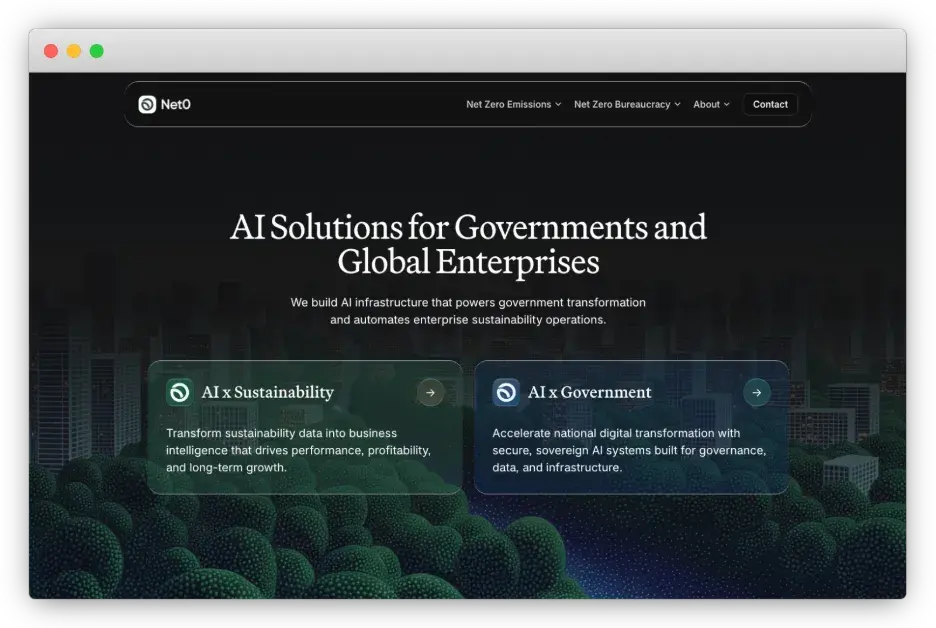
Core Features
Carbon accounting engine positioning with Scope 1–3 support
Automated data ingestion and sustainability dashboards
Audit-ready outputs and methodology traceability positioning
Reporting across multiple ESG frameworks
Pros
Clear Middle East presence with Dubai offices
Strong emphasis on automation and audit-ready data
Potential fit for organizations wanting combined carbon + ESG reporting workflows
Cons
Depth of supplier engagement and advanced Scope 3 workflows may vary depending on implementation
Organizations may need to validate fit for highly regulated or assurance-heavy environments
Best For: Middle Eastern organizations seeking a region-present platform combining carbon accounting with automated data collection and ESG reporting workflows.
7. Persefoni
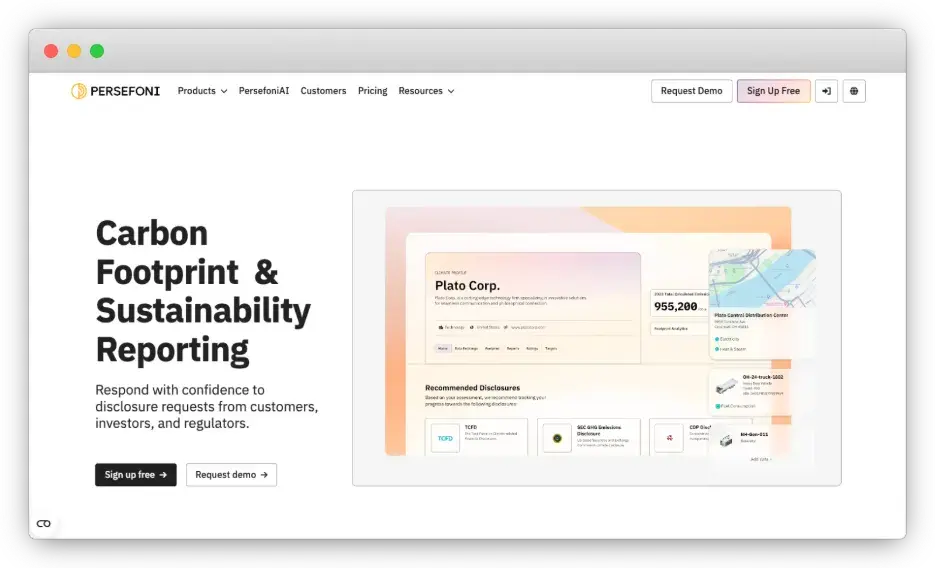
Persefoni also maintains a climate disclosure policy library intended to help users navigate evolving reporting requirements.
Core Features
Calculation methods aligned to widely used carbon accounting standards
Sustainability reporting and regulatory emissions reporting workflows
Scope 3 support and value chain reporting structures
Disclosure policy resources to support multi-jurisdiction reporting programs
Pros
Strong focus on auditability, transparency, and disclosure alignment
Useful for organizations with investor, lender, or capital-market scrutiny
Suitable when assurance-readiness is a priority
Cons
Supplier engagement at scale may still require complementary supplier networks or enablement tooling
Best For: Organizations that need investor-grade carbon accounting and disclosure alignment, particularly where assurance is on the near-term roadmap.
8. SAP Sustainability Footprint Management
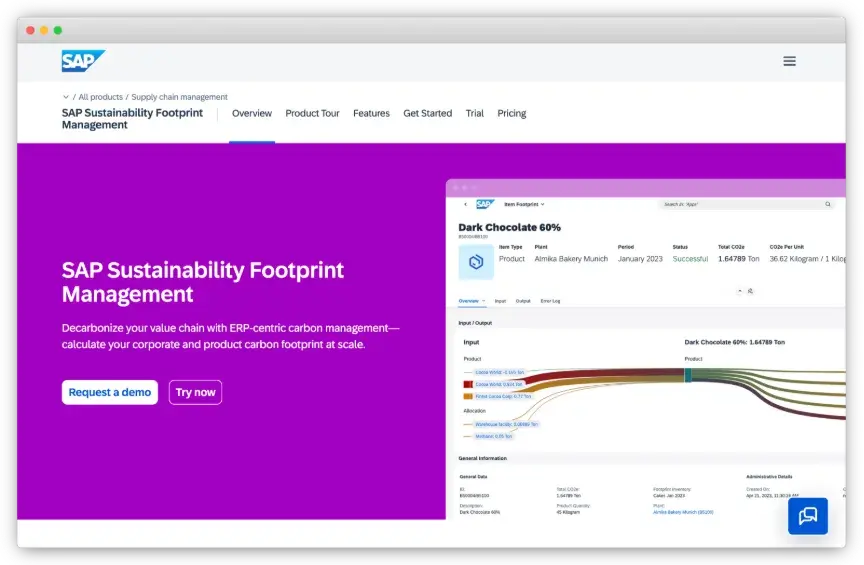
It can be relevant in the Middle East where SAP is widely deployed in energy, manufacturing, construction, and logistics.
Core Features
Corporate, value chain, and product carbon footprint calculation at scale (Scope 1–3)
Granular footprint analytics across the value chain (per vendor)
Integration potential with SAP process and material data to support product-level insights
Pros
Strong fit where SAP is the backbone ERP and material/process data is available
Useful for product footprinting (PCF) and purchased goods (Scope 3.1) transparency
Can reduce data duplication by leveraging existing SAP master and transaction data
Cons
Value depends heavily on SAP landscape maturity and data quality
Supplier engagement workflows may require complementary tooling depending on supplier ecosystem
Best For: SAP-centric organizations seeking to calculate corporate and product footprints using operational and transactional data, with strong links into supply-chain processes.
9. Sweep
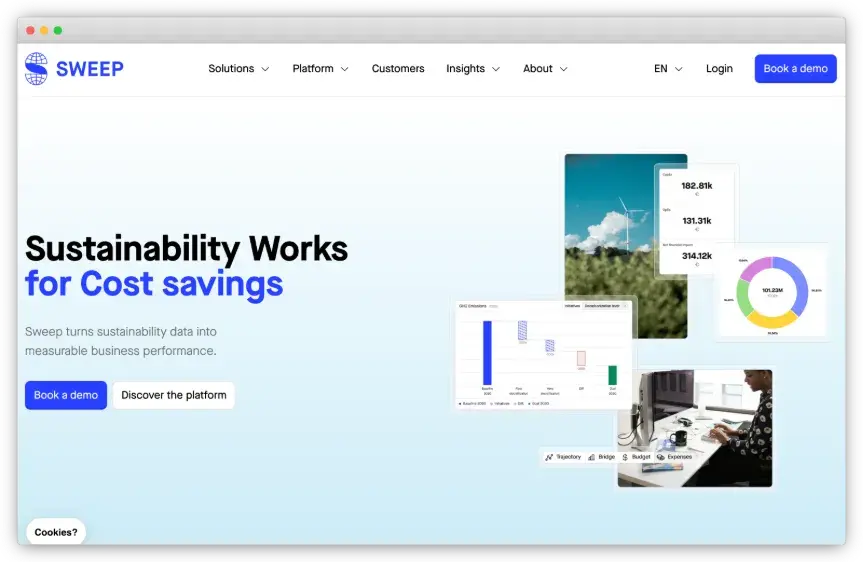
Sweep also publishes practical supplier engagement guidance focused on closing Scope 3 data gaps and enabling collaborative action.
Core Features
Carbon accounting coverage across Scope 1, 2, and 3
Automated emissions data collection and audit-ready data outputs
Supplier engagement guidance and workflows to close Scope 3 data gaps
Accounting plus simulations/reduction features
Pros
Clear orientation to turning data into action (track + simulate + reduce)
Good choice for organizations needing structured supplier engagement support
Often used as a core carbon accounting platform integrated with supplier networks/data exchanges
Cons
Depth of ERP integration and automation can vary by implementation and contract scope - Organizations should validate how supplier portals and data governance fit internal operating models
Best For: Organizations seeking a modern sustainability data platform with strong Scope 3 workflows and a balance of measurement, reporting, and reduction features.
10. Updapt
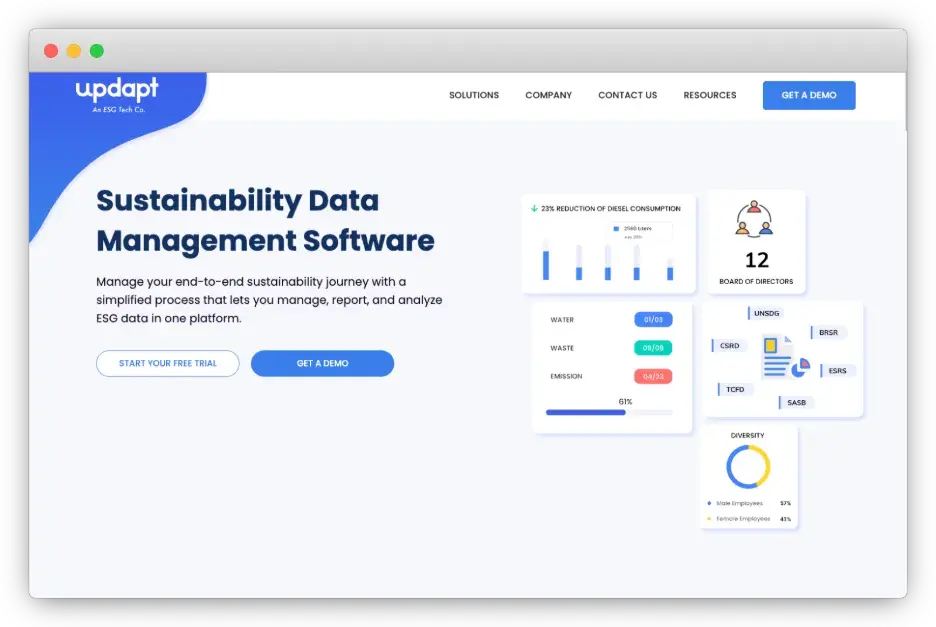
For Middle East programs, it can be relevant where organizations want a workflow that links ESG reporting automation with carbon emissions measurement and reduction tracking.
Core Features
NetZero / emissions management solution
ESG data management and reporting automation
Dashboards, tracking and analytics linking ESG reporting to emissions reduction efforts
Support for multi-module sustainability workflows
Pros
Explicit Middle East presence (Dubai listed among office locations)
Useful where ESG reporting automation is a primary driver alongside emissions tracking
Potentially faster to adopt for organizations seeking a combined reporting + emissions workflow
Cons
May require additional tooling for advanced decarbonization planning or procurement-led Scope 3 engagement
Organizations should assess depth of functionality for complex enterprise use cases
Best For: Organizations prioritizing ESG reporting automation and seeking an integrated workflow that includes emissions management and net‑zero tracking, with Dubai-based support.
What to Look For in a Carbon Accounting Platform
Choosing a carbon accounting platform requires more than comparing feature lists. The best platforms combine compliance-grade accounting with practical supplier enablement and a deep comprehension of Middle East-specific regulations and expectations.
Here are the key factors to evaluate.
Regulatory Alignment
A strong platform should support core global standards while remaining flexible enough to map to local and sector guidance, such as:
ISSB-aligned disclosures (IFRS S1 / IFRS S2) and investor-grade audit trails
GHG Protocol Corporate Standard and Corporate Value Chain (Scope 3) Standard methodologies
Carbon Disclosure Project (CDP) and other common stakeholder disclosures
Assurance-readiness: documented emission factors, calculation logic, and data lineage
Scope 3 and Supplier Engagement Capabilities
For most organizations, Scope 3 is the main challenge. Avoid platforms that only support spend-based estimation without a path to primary data and supplier engagement. Instead, look for:
Structured supplier data collection (surveys, portals, templates, integrations)
Hybrid modeling (spend + activity + supplier-specific primary data)
Supplier-level attribution and allocation (what portion of supplier emissions is attributable to your purchases)
Campaign management: nudges, training, and supplier onboarding workflows
Supplier benchmarking, scorecards, and category/contract heatmaps for procurement action
Integration and Automation
Middle East organizations often run complex ERP and finance stacks (SAP, Oracle, Dynamics). Data automation reduces the cost of maintaining audit-ready inventories. Consider:
ERP/AP integration for purchase-order, invoice, and spend classification inputs
Utility and fuel data ingestion (including automated connections where available)
Logistics and freight activity integration (distance, mode, weight, lanes)
APIs, data connectors, and robust access controls for multi-entity governance
Decarbonization and Action Enablement
Measurement alone does not reduce emissions. The most useful platforms help procurement and sustainability teams convert carbon insights into decisions and reductions with:
Category-level abatement levers and reduction initiative tracking
Scenario modeling (e.g., renewable electricity procurement, supplier switching, material substitutions)
Product carbon footprint (PCF) capability for regulated and customer-driven markets
Target setting alignment (e.g., SBTi-aligned pathways) and progress dashboards
From Measurement to Meaningful Reduction in the Middle East
The Middle East carbon accounting landscape is evolving quickly, but unevenly. Regulatory requirements and capital market expectations are tightening in pockets of the region, while many organizations are still building foundational capabilities alongside complex, globally distributed supply chains. At the same time, multinational customer requirements, particularly around Scope 3 and product footprints, continue to accelerate.
No single platform is right for every organization. The best solution depends on regulatory exposure, internal data capabilities, and where suppliers sit on the carbon maturity ladder, which in the Middle East can vary significantly across sectors such as energy, construction, logistics, and finance.
Some organizations need foundational spend-based reporting, while others require supplier-specific allocation, product carbon footprinting, and coordinated reduction planning.
Measurement is the starting point, not the destination. In a region shaped by carbon-intensive industries and global trade flows, emissions reductions depend on procurement-led execution: supplier segmentation, contract requirements, incentives, data standardization, and the ability to track real reduction outcomes across categories.
Platforms that combine carbon accounting with supplier enablement and actionable decarbonization workflows are increasingly positioned to support the next phase, moving from disclosure to measurable Scope 3 reduction across complex regional and international supply chains.
Note: The information in this article is based on publicly available sources at the time of writing. Vendor capabilities evolve quickly, so we recommend reviewing each provider’s website for the most current product information.
About the author

Mat Langley
Advisor
Mat Langley is an advisor to Green Project Technologies, an AI climate management platform helping businesses of all sizes measure, manage, and reduce emissions across complex global value chains.