
See which suppliers actually drive your emissions
AI-powered supplier and product analysis uses your procurement data to prioritize where to focus and who to engage.
Trusted by 700+ enterprise clients


Upload your spend data. We’ll do the rest.
1
Upload
Securely upload your procurement and spend data from your ERP system into the Green Project platform.
2
Map
AI maps your suppliers against Green Project’s global supplier dataset, enriching their profiles with emissions data from across the public data landscape - including CDP, SBTi, EcoVadis, sustainability reports, and more.
3
Analyze
See which suppliers and products drive your Scope 3 footprint, where credible data already exists, and where the genuine gaps are.
4
Segment
Group suppliers by materiality, maturity, region, and category to prioritize who to engage first and tailor your approach.
From spend data to a plan you can act on
Understand suppliers before you engage
See what actually drives your footprint
Segment suppliers into an engagement plan
Turn supply chain data into a tailored plan
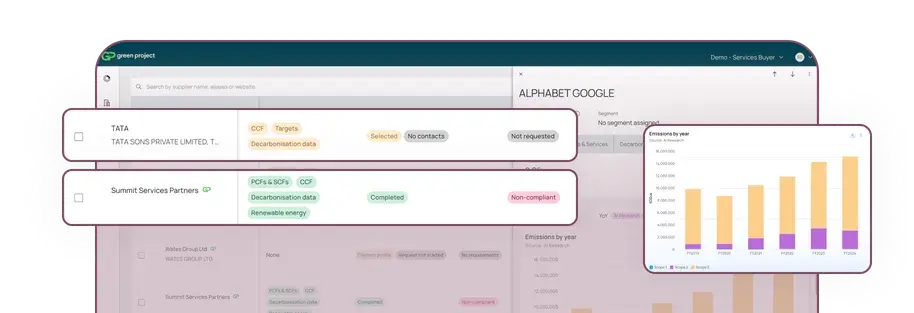
Get a clearer picture of what’s happening across your supply chain. Explore your footprint across suppliers, products and categories, uncover your biggest emissions hotspots, and drill into supplier profiles to understand what’s already known about their emissions and decarbonization progress.
Bringing these different views together gives you the context to make better-informed decisions about where to focus and what to do next.
Explore Supply Chain Action

Engaging Your Supply Chain to Reduce Scope 3 Emissions
Learn how to engage suppliers, improve emissions data, and drive measurable Scope 3 reductions across your supply chain.
Why Your Scope 3 Numbers Are Only as Good as Your Supplier Data
Learn why reliable supplier data is essential for accurate Scope 3 reporting and meaningful emissions reductions.

Why Scope 3 Emissions Reduction is Lagging
Green Project CEO Sam Stark shares his perspective in the Financial Times SustainableViews.

A Roadmap to Primary Scope 3 Data
Learn how to collect reliable primary supplier data and improve the accuracy of your Scope 3 emissions reporting.
Turn your procurement data into a plan
See how Green Project can help you identify where to focus, prioritize who to engage, and tailor an engagement plan.
Frequently Asked Questions
Have more questions?
Who is supply chain analysis for?
Procurement and sustainability teams who need to understand which suppliers and products drive their Scope 3 emissions, and where to focus engagement, without contacting suppliers first.
How is this different from a standard spend-based Scope 3 estimate?
Spend-based estimates apply industry-average emission factors to your spend. Green Project goes further by mapping that spend to individual suppliers and products and bringing in supplier-specific data from our database and across publicly available sources wherever it exists.
Does this require my suppliers to do anything?
No. Supply Chain Analysis starts with your procurement and spend data, then brings in existing supplier information from publicly available sources. No supplier outreach is required, so you can understand what’s already known before asking suppliers for more.
What happens after the analysis?
You’ll know which suppliers and products drive your footprint, what’s already known about them, and where the gaps are. Suppliers are segmented by materiality, maturity, region and category, giving you a ready-made plan for who to engage, what to ask for and how to tailor your approach.