
Know where to cut emissions, what it costs, and when to act
Turn your emissions data into a costed, prioritized path to your climate targets.
Trusted by 700+ enterprise clients


From your data to a costed plan
1Start with your data
Bring in your procurement or emissions data to build the foundation for your transition plan.
2Identify your biggest opportunities
Break down emissions across your business and supply chain to identify hotspots, suppliers, and areas with the greatest reduction potential.
3Find your lowest-cost pathway
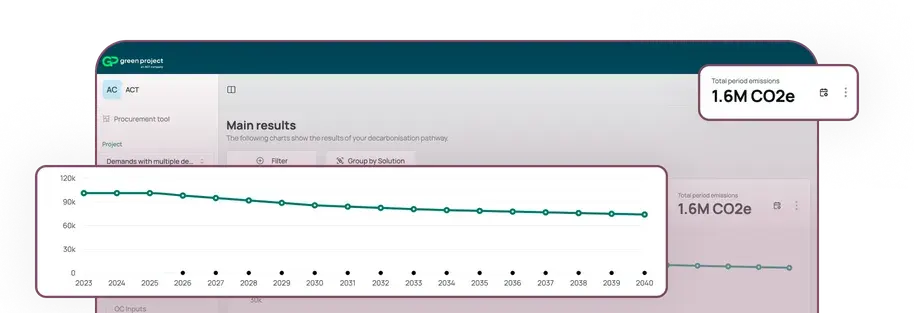
Our optimization engine uses real-world economics data to identify the lowest-cost pathway to your decarbonization targets.
4Select your pathway
Explore scenarios for business growth, global decarbonization, and carbon costs, then select the pathway that best reflects how you expect your business and the world around it to change.
What this means for your decarbonization roadmap
Move from emissions visibility to a prioritized plan, grounded in real-world costs.
Make better investment decisions
Focus effort where it matters
Turn targets into next steps
Engage suppliers and explore solutions
See deeper, reduce smarter
To create a credible Scope 3.1 transition plan, you need to understand what drives the emissions of the products you purchase. Our product intelligence breaks down a product’s impact across electricity, heat, transport, waste and feedstock throughout your supply chain.
Identify the most cost-effective reduction levers, where you can influence change directly, and where hotspots sit deeper in your supply chain. Use these insights to build your Scope 3 reduction strategy and engage suppliers with concrete actions.
Explore Decarbonization

Build a Winning Business Case for Scope 3 Decarbonization
Learn how to build a compelling business case for Scope 3 decarbonization and secure company-wide buy-in.
Entrepreneur: Building a Business Case for Decarbonization
Sam Stark shares how businesses can build the case for decarbonization by connecting climate action to financial value, resilience, and growth.

Green Project Acquires the Zeroute Platform
Delivering end-to-end enterprise decarbonization planning and action

How Green Project Uses AI to Simplify Scope 3 Decarbonization
See how Green Project uses AI to simplify Scope 3 data, engage suppliers, and accelerate emissions reductions.
Turn your climate targets into action
See where to focus, select your pathway, and take action by engaging suppliers with concrete decarbonization steps and exploring market-based solutions.
Frequently Asked Questions
Have more questions?
Can I explore different decarbonization scenarios?
Yes. You can define different scenarios based on factors such as business growth, expected global decarbonization and carbon costs, and explore the pathways associated with each.
How does Green Project identify the lowest-cost pathway to my targets?
Green Project uses mathematical optimization and real-world economics data to identify the lowest-cost pathway to your decarbonization targets.
How does Green Project account for future changes in the wider economy?
Green Project incorporates real-world grid and transportation decarbonization forecasts, alongside typical costs for reduction actions, to inform your pathway.
How can I put my transition plan into action?
Use your pathway to prioritize reduction actions, engage suppliers with concrete decarbonization actions, and explore market-based solutions.