
The most accurate emissions attribution for service companies
Our platform enables service suppliers to attribute emissions in line with work actually provided, decoupling your reporting from spend.

Don't ignore half your supply chain. Use SCFs to attribute emissions, as the counterpart to PCFs.

Track emissions from what you're buying in the terms you buy them (hours, FTEs, etc.,).

Green Project has a 100% track record of passing audits using SCFs.
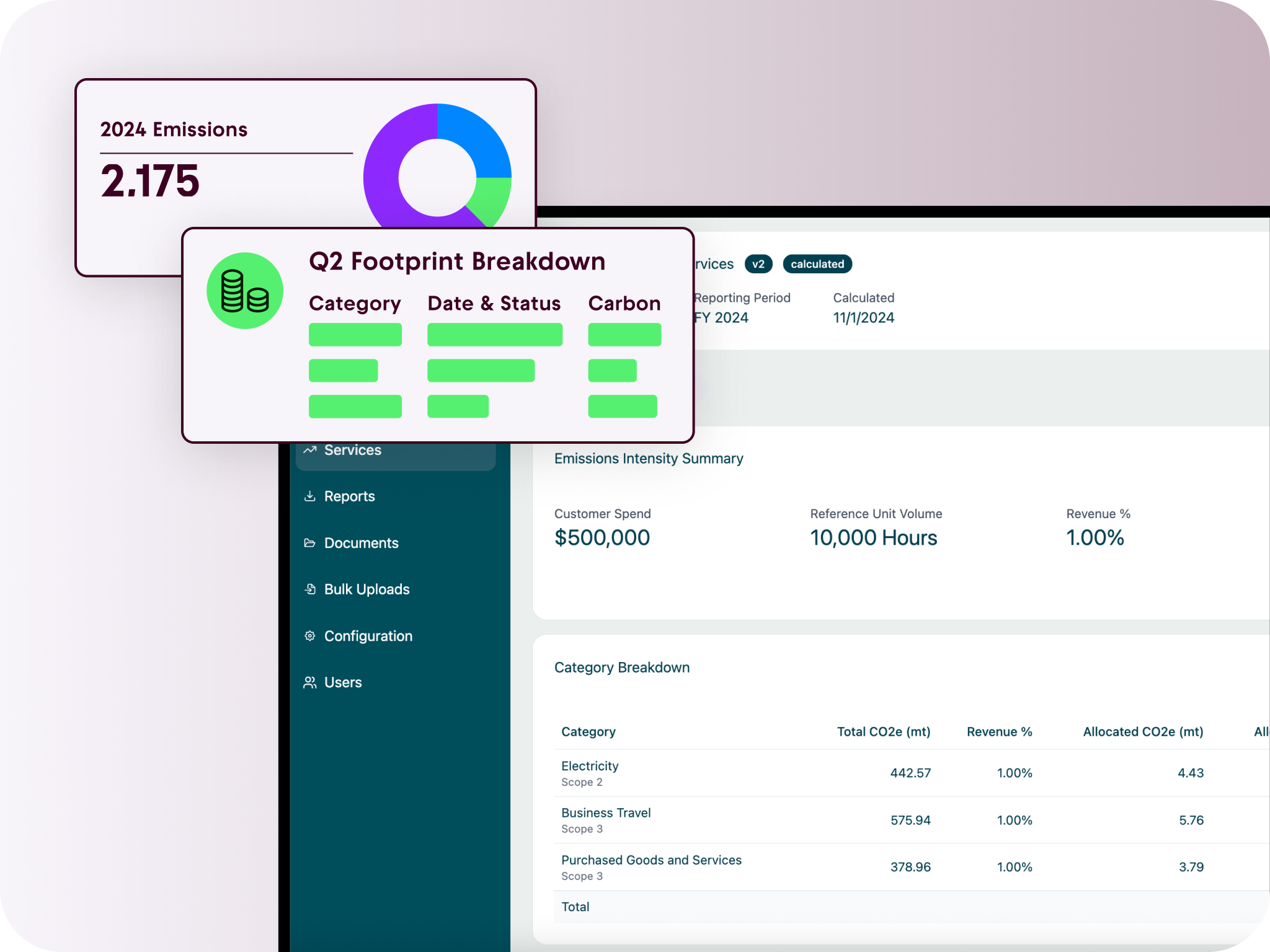
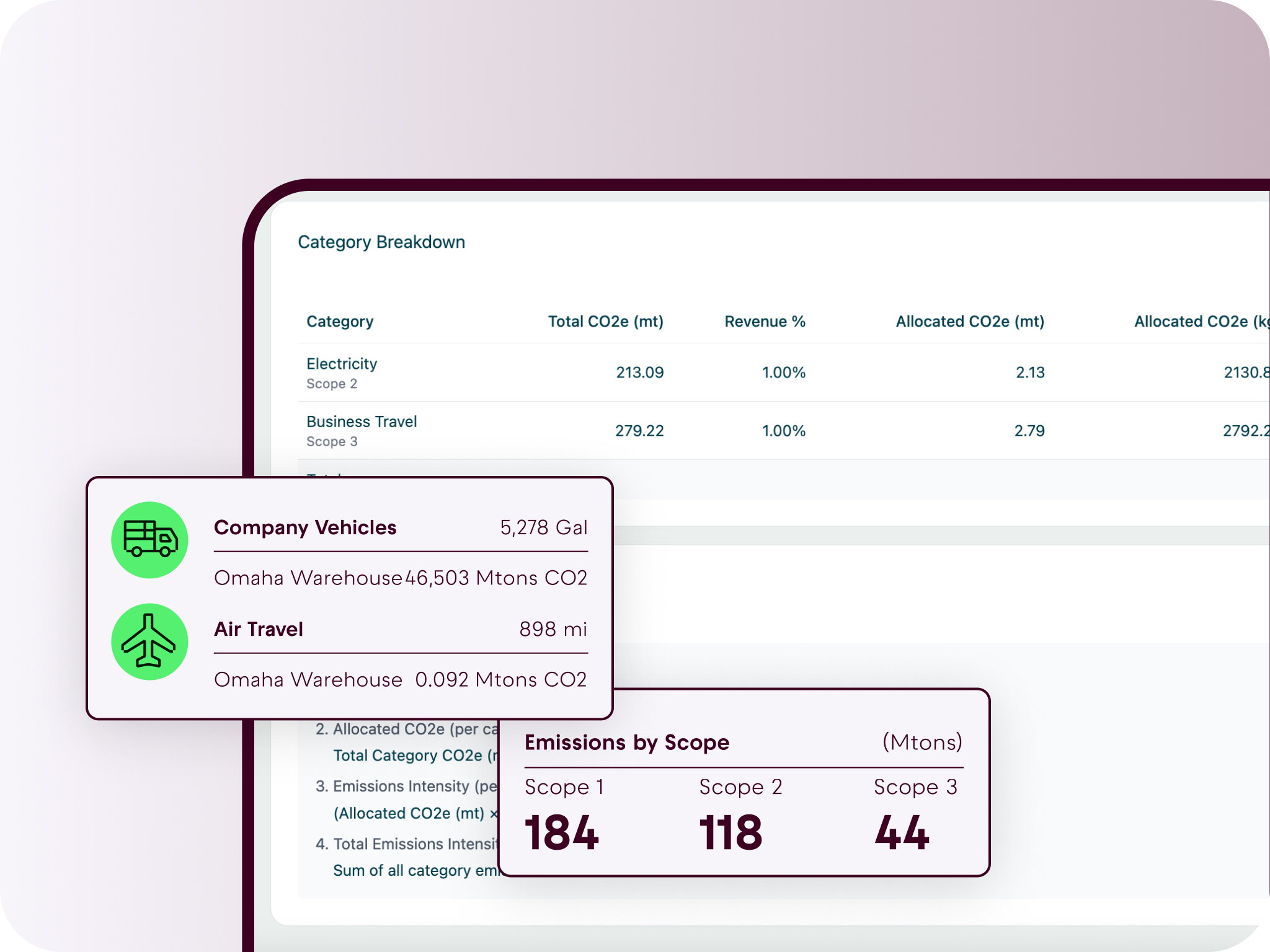

Automated data quality assurance checks ensure your SCFs are complete, consistent, and auditable.

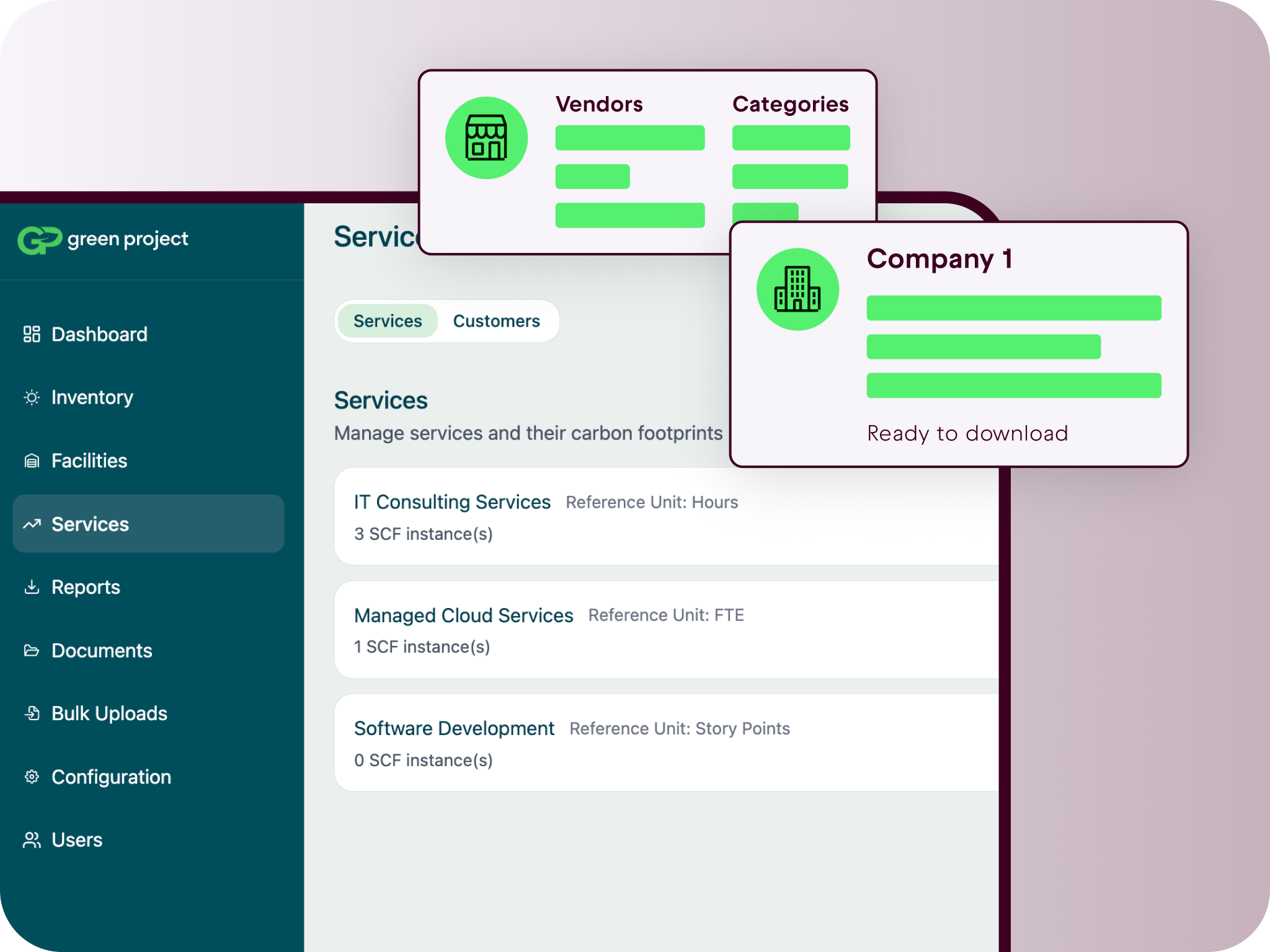
Segment suppliers by service type and compare across delivered services - like hours or FTEs - even if prices vary greatly.
Prioritize reduction efforts with higher-quality supplier data, better understanding the emissions relevant to you and delivering tailored advice to each supplier with Green Project's decarbonization lever database.

Gain visibility into supplier-specific reduction activities, relevant to your business.

Identify emissions hotspots and request specific reduction strategies, surfaced by our AI decarbonization engine.

Request suppliers to procure renewable energy for services provided.
What happens when you measure better? One supplier's attributed emissions dropped 30% by honing in on the offices, employees, and activities supporting their client.

To create and prioritize low-emission category strategies

To leverage GHG data in vendor selection & contracting

To center collaboration on carbon-intensive suppliers

Tune in to hear our in-house experts discuss:
Ready to upgrade your supplier engagement program?
Engage suppliers, track attributed emissions, and achieve real reduction across your supply chain


An SCF measures the greenhouse gas emissions associated with delivering a specific service, attributing them based on how the work is actually performed rather than how much it costs.
It's designed for service-based suppliers, such as consulting firms and IT providers, that need to calculate and share credible, service-level emissions data with their buyers.
Traditional emissions accounting falls short for service companies, there is no physical product to measure, and scaling a corporate carbon footprint by revenue is an inaccurate way to express emissions intensity. SCF addresses this gap by creating meaningful intensity metrics tied to the actual services delivered, such as emissions per consulting hour, per event, or per support ticket resolved.
The SCF calculator follows a four-step process:
1. Guided supplier experience: Suppliers calculate SCFs through an intuitive interface, attributing emissions by the reference units that reflect how their service is actually delivered, hours, FTEs, or project scope, rather than spend.
2. Automated quality assurance: Built-in validation checks identify data gaps and inconsistencies, helping suppliers improve submissions before sharing results.
3. Consistent, comparable outputs: Every calculation follows a standardized methodology, ensuring SCFs are credible and easily integrated into enterprise Scope 3 programs.
4. Seamless data sharing: Verified SCFs flow directly into buyer dashboards replacing spend-based estimates with primary service-level data and enabling real-time visibility across all service categories.
- Replace spend-based estimates with verified, service-level emissions data for more accurate Scope 3 reporting
- Give enterprises visibility into their services suppliers, which has historically been a blind spot
- Enable service suppliers to measure and share the emissions behind what they deliver, many for the first time
- Extend Scope 3 precision into services spend, ensuring your supply chain emissions picture is complete
Spend-based attribution ties emissions to what a service costs rather than how it is delivered. Pricing for services varies widely based on geography, contract structure, and brand, even when the underlying work looks identical. SCFs decouple reporting from spend by attributing emissions in line with the work actually provided, using reference units like hours or FTEs. This makes the data far more accurate and comparable across suppliers.