

Carbon accounting software adoption across Africa is accelerating, driven by regulatory change, investor expectations, and pressure from global supply chains.
Governments are introducing ISSB-aligned reporting roadmaps, while investors and multinational buyers increasingly require emissions data from companies and their suppliers. This is pushing organizations to move beyond spreadsheets toward more structured systems.
The carbon accounting software market in Africa is growing at around 18% annually, reflecting rising demand for standardized, auditable emissions reporting.
While requirements vary by country and sector, several jurisdictions have published clear roadmaps. For example:
For procurement teams, the biggest challenge is often collecting reliable emissions data from their suppliers. Many supply chains are SME-heavy, suppliers may not have access to detailed energy or activity data, and multi-tier value chains make it difficult to trace emissions beyond direct vendors.
The most effective tools are those that support estimation where needed, while providing a clear path to collecting primary supplier data and driving measurable reduction over time.
Below are ten leading carbon accounting software platforms relevant for organizations operating in Africa in 2026, presented in alphabetical order.
Each offers a different mix of regulatory alignment, Scope 3 capabilities, automation, and supplier support.
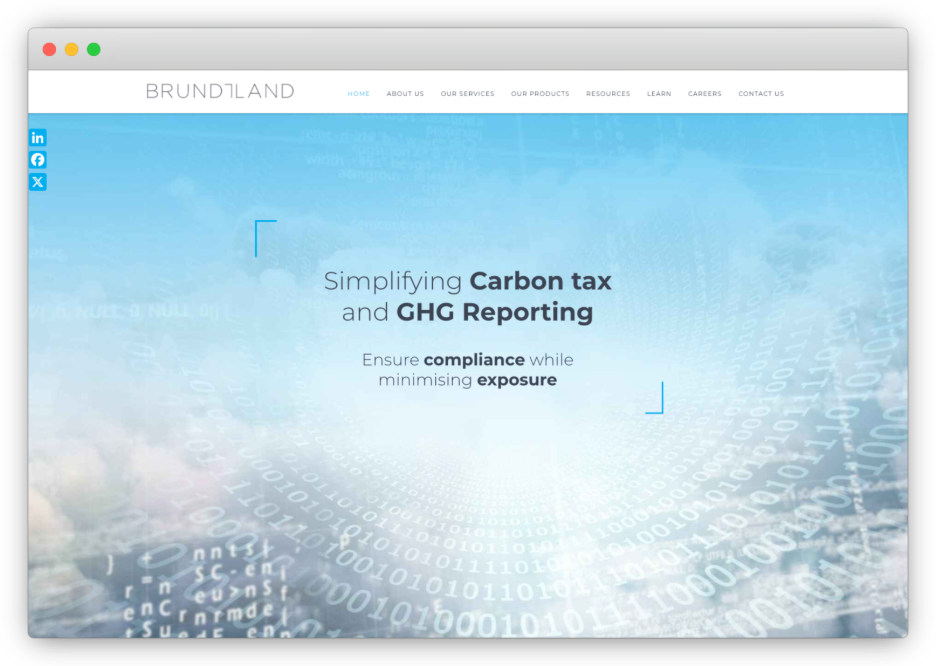
Brundtland is a South Africa-headquartered sustainability consultancy that offers EPCAM, a cloud platform designed to help companies manage ESG and carbon reporting in one place.
The platform focuses on helping organizations collect emissions data across Scopes 1-3, organize it into consistent reporting frameworks, and generate disclosure-ready reports.
For companies operating in Africa, Brundtland’s regional presence and consulting support can make implementation easier, particularly for teams that are still building internal sustainability processes.
EPCAM is often used by organizations that want a single system to manage ESG metrics, emissions reporting, and performance tracking without needing to piece together multiple tools.
Core Features
Pros
Cons
Best For: Africa-headquartered or Africa-operating organizations that want a locally supported ESG and carbon reporting platform to manage Scope 1-3 emissions and maintain consistent sustainability disclosures.
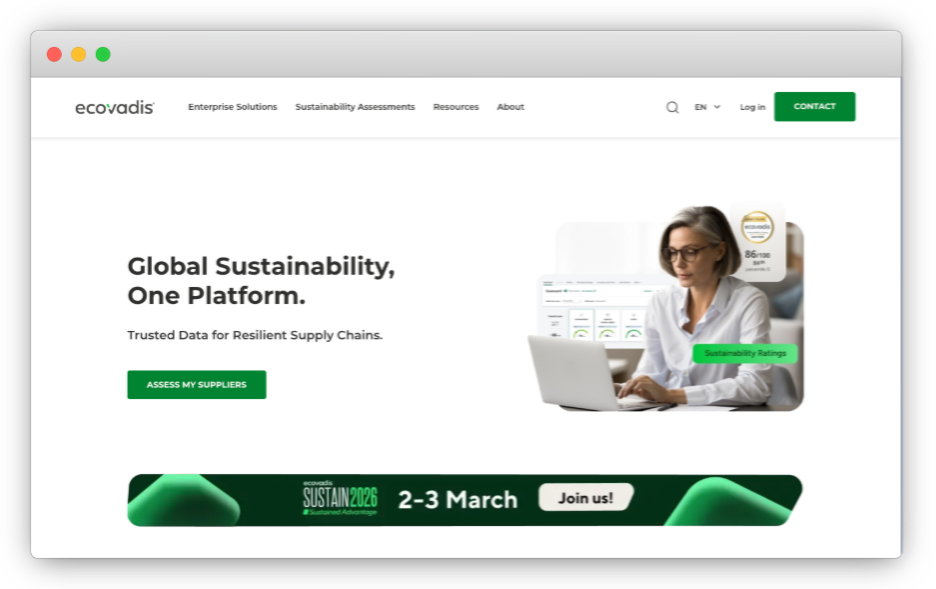
EcoVadis is a sustainability ratings and supplier engagement platform widely used by procurement teams around the world. Many large companies use EcoVadis scorecards to evaluate suppliers on sustainability topics such as environmental impact, labor practices, ethics, and procurement standards.
Its Carbon Solution extends this model to climate data. Buyers can request emissions information from suppliers, assess their carbon maturity, and track progress over time. Because many suppliers already participate in the EcoVadis network, companies can often collect sustainability data without sending separate questionnaires or launching entirely new reporting processes.
In African markets, EcoVadis is most often used by suppliers that participate in global value chains, particularly when multinational customers require standardized sustainability disclosures.
Core Features
Pros
Cons
Best For: Organizations that want to scale supplier engagement and collect Scope 3 emissions data from large or mature suppliers that are already calculating and disclosing their own emissions.
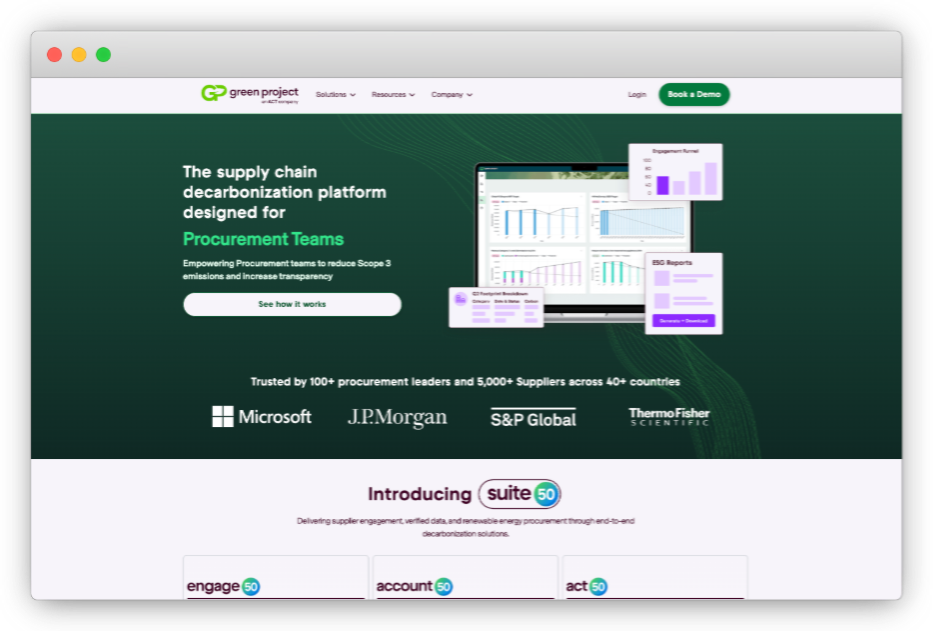
Green Project Technologies is a carbon accounting and supply-chain decarbonization platform designed to help companies measure emissions across Scopes and work directly with suppliers to reduce them.
The platform combines carbon accounting with procurement-oriented workflows that make it easier to collect emissions data across the entire supplier base, including suppliers of all sizes, and provides structured tools to support supplier participation and track progress across Scope 3 programs.
In practice, Green Project is often used by organizations that want to move beyond emissions reporting and start engaging suppliers in measurable decarbonization initiatives.
Its approach centers on structured supplier outreach across the full supplier base, supported by zero-cost supplier tools, external data validation, and service-level agreements (SLAs) that drive participation and data completeness. The platform also enables companies to track and manage emissions reduction initiatives over time.
Core Features
Pros
Cons
Best For: Organizations that need robust Scope 1–3 carbon accounting alongside procurement-led Scope 3 decarbonization, including supplier data collection, engagement, and progress tracking across large supply chains.
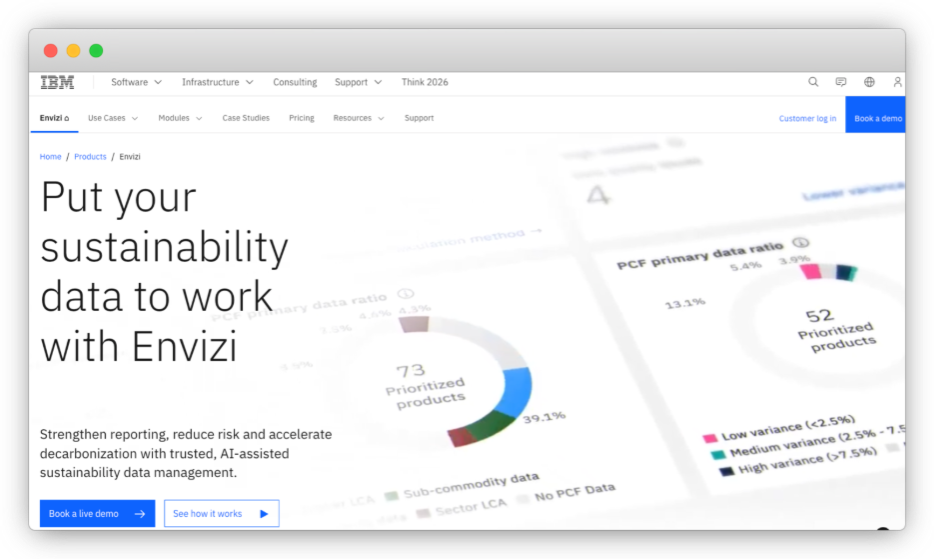
IBM Envizi is a sustainability data management and emissions accounting platform designed to help large organizations consolidate environmental data from many sources into a single system.
Companies often use Envizi when emissions data is scattered across multiple countries, facilities, and internal systems. The platform focuses on organizing that data, applying consistent emissions calculations, and producing standardized reports that align with common climate disclosure frameworks.
Because it is built for complex enterprise environments, Envizi is often used by organizations that need strong data governance, automation, and audit-ready reporting across large operations.
Core Features
Pros
Cons
Best For: Large enterprises that need strong sustainability data governance and reporting infrastructure, particularly when data must be consolidated across multiple countries, systems, and operational units.
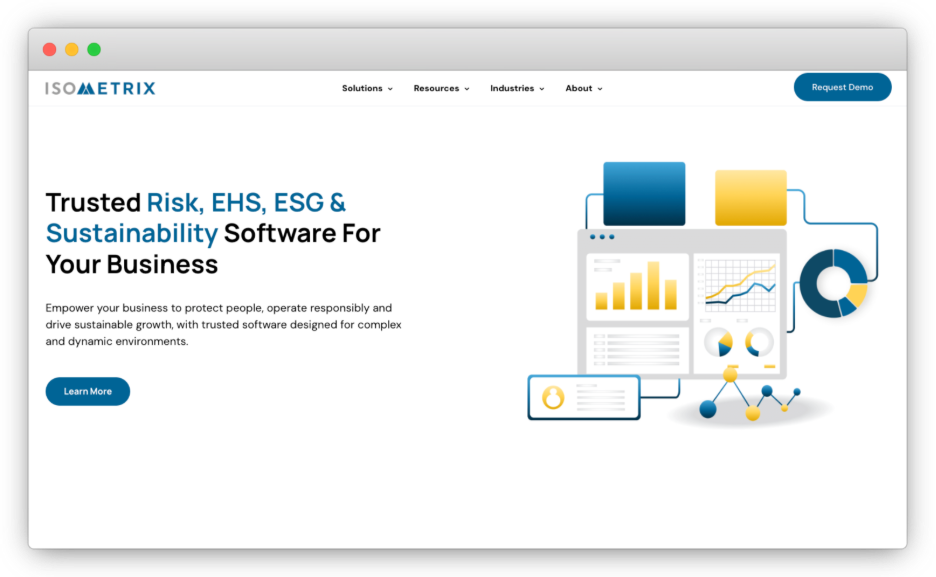
IsoMetrix is an ESG and risk management software provider with deep roots in South Africa and a strong presence in industries such as mining, energy, and infrastructure. The platform is widely used by organizations that need structured governance around environmental, health, safety, and sustainability data.
Its Carbon Footprint Management capabilities extend this broader ESG system to emissions reporting. Companies can track Scope 1, 2, and 3 emissions, apply standardized emissions factors, and generate reports aligned with disclosure frameworks.
Because IsoMetrix is built around enterprise governance and risk workflows, it is often used by organizations that want carbon reporting integrated with their wider ESG or EHS management systems rather than managed as a standalone tool.
Core Features
Pros
Cons
Best For: Organizations operating in Africa that need enterprise ESG governance and carbon reporting in one system, particularly in regulated or asset-intensive sectors such as mining, energy, and infrastructure.
Microsoft Sustainability Manager is a cloud-based sustainability data platform that helps organizations collect environmental data, calculate emissions, and generate climate disclosures.
The platform is built on Microsoft’s Cloud for Sustainability and integrates with tools such as Azure, Power Platform, and Dynamics. For companies already operating within the Microsoft ecosystem, this makes it easier to connect sustainability data with existing operational and financial systems.
Microsoft Sustainability Manager supports emissions tracking across Scopes 1, 2, and 3, with configurable emissions factors and automated data ingestion. Many organizations use it as a centralized system for managing sustainability data and producing standardized reports.
Core Features
Pros
Cons
Best For: Organizations that want to manage sustainability data within the Microsoft ecosystem, particularly when Azure, Dynamics, and Power Platform are already part of the company’s technology stack.
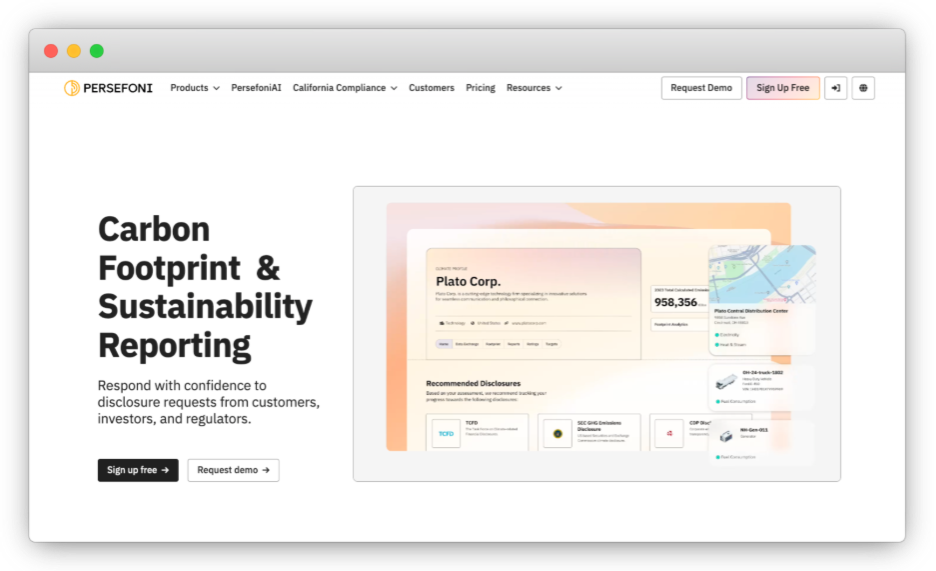
Persefoni is an enterprise carbon accounting platform designed to help companies measure emissions and produce disclosure-ready climate reports. The platform places a strong emphasis on financial-grade carbon accounting, meaning its calculations, documentation, and workflows are built to support auditability and regulatory reporting.
Many organizations use Persefoni when preparing climate disclosures for investors, regulators, or lenders. The platform helps companies calculate Scope 1, 2, and 3 emissions, organize the underlying data, and generate reports aligned with common frameworks such as the GHG Protocol and emerging climate disclosure regulations.
In addition to emissions accounting, Persefoni provides tools to track evolving climate regulations and disclosure expectations through its policy library.
Core Features
Pros
Cons
Best For: Organizations that need financial-grade carbon accounting and disclosure-ready reporting, particularly when preparing for compliance with climate regulation or capital markets scrutiny.
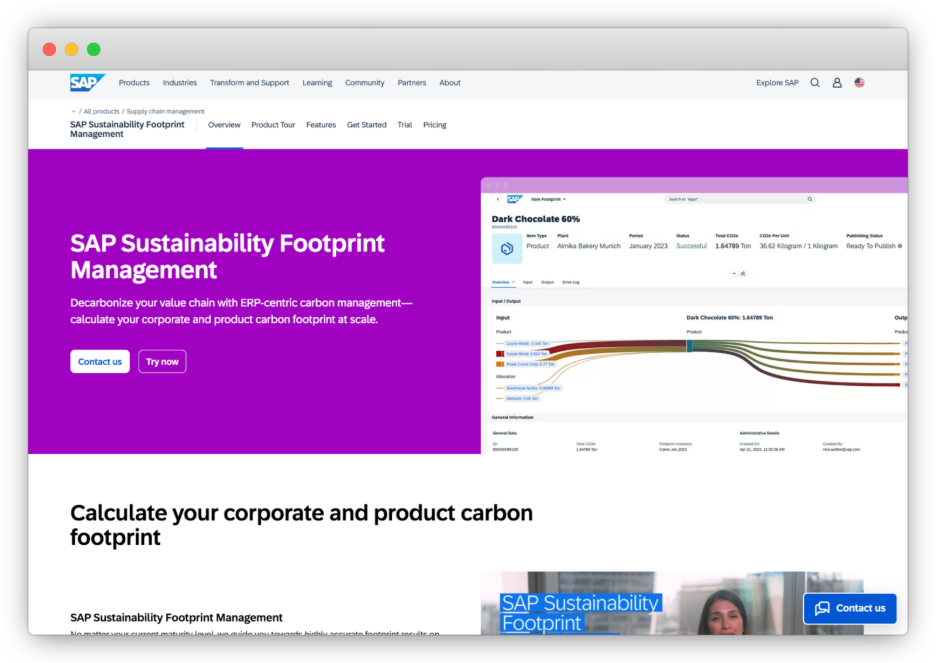
SAP Sustainability Footprint Management is a carbon accounting platform designed to calculate corporate, value chain, and product carbon footprints using data already stored in SAP systems.
Rather than collecting emissions data separately, the platform can use existing operational and transactional data from SAP ERP such as procurement records, production data, and material flows. This allows organizations to estimate emissions across Scope 1, 2, and 3 while maintaining traceability back to underlying business activities.
For companies already running SAP across manufacturing, logistics, or supply chain operations, this approach can make it easier to embed emissions calculations directly into business processes and generate product-level carbon footprints.
Core Features
Pros
Cons
Best For: Organizations already running SAP ERP environments that want to calculate corporate and product carbon footprints using operational data and improve visibility into supply-chain emissions.
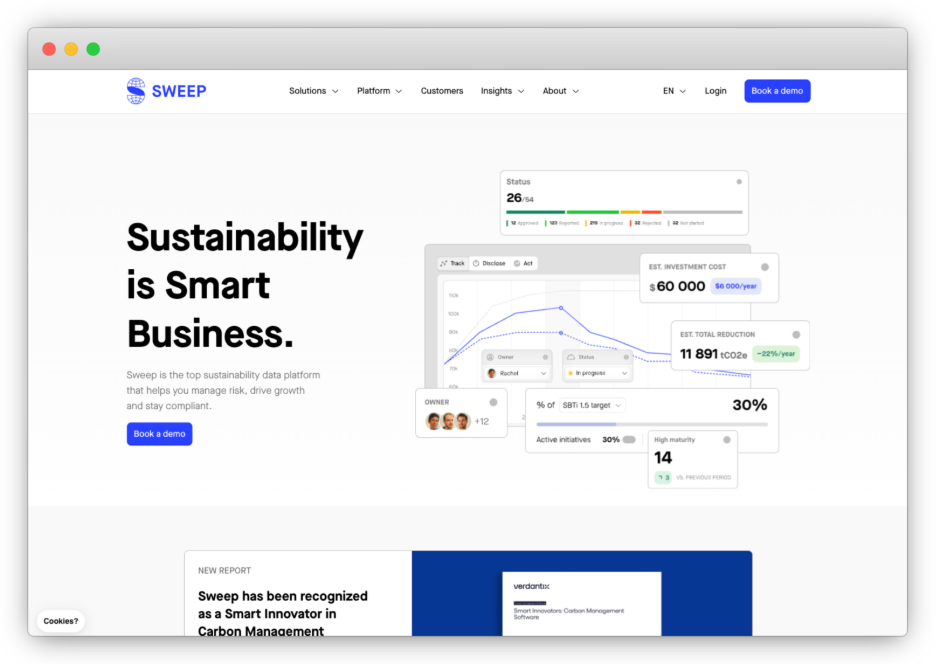
Sweep is a carbon accounting and sustainability management platform that helps organizations measure emissions, track climate targets, and collaborate across teams and suppliers on decarbonization efforts.
The platform supports Scope 1, 2, and 3 emissions tracking and provides tools to collect sustainability data across internal teams and coordinate sustainability initiatives across the organization.
In addition to emissions accounting, Sweep includes scenario modeling and collaboration features that allow sustainability teams to track progress toward climate targets and coordinate actions across the organization.
Core Features
Pros
Cons
Best For: Organizations looking for a flexible, user-friendly platform to manage emissions tracking, target setting, and cross-team sustainability and procurement initiatives.
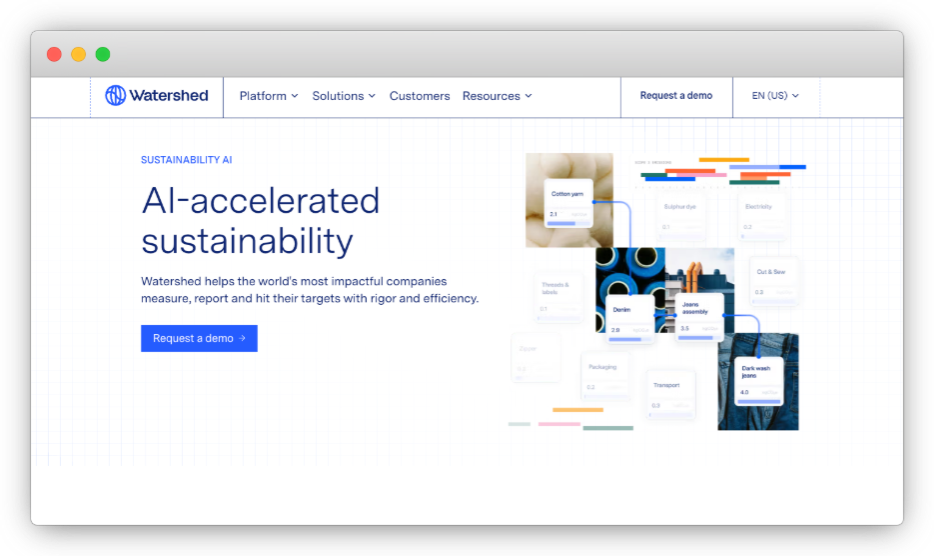
Watershed is an enterprise climate platform that helps organizations measure emissions, produce climate disclosures, and plan decarbonization strategies.
The platform combines carbon accounting with analytics tools that help companies understand where emissions come from and evaluate potential reduction strategies. Many organizations use Watershed not only to calculate Scope 1, 2, and 3 footprints, but also to track climate targets and model how different operational or supply-chain changes could reduce emissions over time.
Watershed also provides resources and guidance to help companies engage suppliers and build Scope 3 reduction programs.
Core Features
Pros
Cons
Best For: Enterprises focused on climate strategy, emissions analytics, and target setting, particularly those looking to model and plan decarbonization pathways across operations and supply chains.
Choosing a carbon accounting platform in Africa often comes down to what supplier emissions data you have today, not what you wish you had, and which features will really move the needle for your particular use case.
In many cases, emissions data is incomplete. Suppliers may not have the systems or expertise to provide detailed data, and companies often need to start with estimates before improving accuracy over time.
The best platforms work in this reality. They let you start with available data, but also make it easier to collect better supplier data over time and gradually replace estimates with primary data.
Here are the key factors to evaluate.
Carbon reporting requirements are evolving quickly. A strong platform should align with major global and regional standards while also helping companies respond to emerging sustainability requirements, customer data requests, and investor expectations.
Look for platforms that support:
Many companies struggle to obtain emissions data from their full supplier base. Suppliers may lack internal expertise, dedicated sustainability teams, or the systems needed to generate detailed emissions data.
Look for platforms that make it easy for suppliers to participate without adding unnecessary complexity.
Key capabilities include:
Platforms that simplify supplier participation can dramatically increase response rates and improve data quality over time.
In many operating environments, emissions data will be incomplete at first. Strong platforms are transparent about assumptions and make it easy to replace estimates with better data as it becomes available.
Look for tools that support practical data workflows, including:
These capabilities allow companies to begin measuring emissions quickly while improving accuracy over time.
Measurement is only the starting point. The real value of a carbon accounting platform comes from helping internal teams and suppliers translate emissions data into concrete reduction actions.
Look for platforms that support decision-making and supplier collaboration, including:
Platforms that link measurement with action help sustainability and procurement teams move beyond reporting toward measurable emissions reduction.
No single platform is right for every organization. Some companies need enterprise-grade reporting and governance to meet investor or regulatory expectations. Others are earlier in the journey and need tools that make it easier for suppliers to submit data and participate in emissions reporting.
What matters most is choosing a platform that supports progress over time. Platforms that combine carbon accounting with supplier engagement and reduction planning are better positioned to help organizations move from reporting to measurable decarbonization.
If your organization is exploring how to move from carbon measurement to supplier-driven emissions reduction, Green Project helps procurement and sustainability teams engage suppliers, improve data quality, and turn Scope 3 insights into actionable decarbonization programs.
Note: The information in this article is based on publicly available sources at the time of writing. Vendor capabilities evolve quickly, so we recommend reviewing each provider’s website for the most current product information.
What is a carbon accounting platform?
A carbon accounting platform is software that helps organizations measure, manage, and report greenhouse gas emissions across Scope 1, Scope 2, and Scope 3. Most platforms align with standards such as the GHG Protocol and ISO 14064.
Beyond calculation, many also support regulatory reporting, audit trails, supplier data collection, and scenario modeling to guide decarbonization efforts.
What is the best carbon accounting platform?
There is no single best platform for every organization. The right solution depends on regulatory exposure, Scope 3 complexity, supplier maturity, internal data capabilities, and whether the priority is compliance, transparency, or emissions reduction. Organizations at different maturity stages require different levels of functionality.
Which features are essential for a carbon accounting platform?
Most organizations should look for regulatory alignment, scope 3 and supplier enablement capabilities, data quality and automation, and decarbonization and action enablement features.
For supply chain-heavy organizations, supplier engagement and hybrid activity data support are increasingly important.
How much do carbon accounting platforms cost?
Pricing varies based on company size, number of entities, data complexity, Scope 3 depth, and implementation needs.
Enterprise platforms typically require more customization and integration, while SME-focused tools emphasize faster onboarding and lower complexity.
What are the primary differences between carbon accounting platforms?
Key differences typically include:
The right choice depends on whether the goal is reporting compliance or measurable emissions reduction.
