CSRD-driven disclosure expectations and assurance readiness are pushing European organizations to move beyond spreadsheets and build repeatable, auditable carbon accounting and supplier engagement workflows.
In this guide, we explore ten carbon accounting software platforms relevant for organizations operating in Europe, presented in alphabetical order: EcoVadis, Green Project Technologies, Greenly, IBM Envizi, Microsoft Sustainability Manager, Normative, Plan A, SAP Sustainability Footprint Management, Sphera, and Sweep.
Carbon accounting software adoption across Europe is accelerating rapidly due to regulations like CSRD and the EU Omnibus directive, investor expectations, and the practical need to manage value chain emissions with audit-ready evidence.
For procurement leaders, the practical implication is simple: the hardest emissions are typically Scope 3, and European value chains are often multi-tier and cross-border.
The best platforms help you (1) build an auditable baseline, (2) engage suppliers at scale, and (3) convert hotspot data into category strategies and negotiated reduction actions.
Our top ten carbon accounting software platforms in Europe are, in alphabetical order:
EcoVadis
Green Project Technologies
Greenly
IBM Envizi
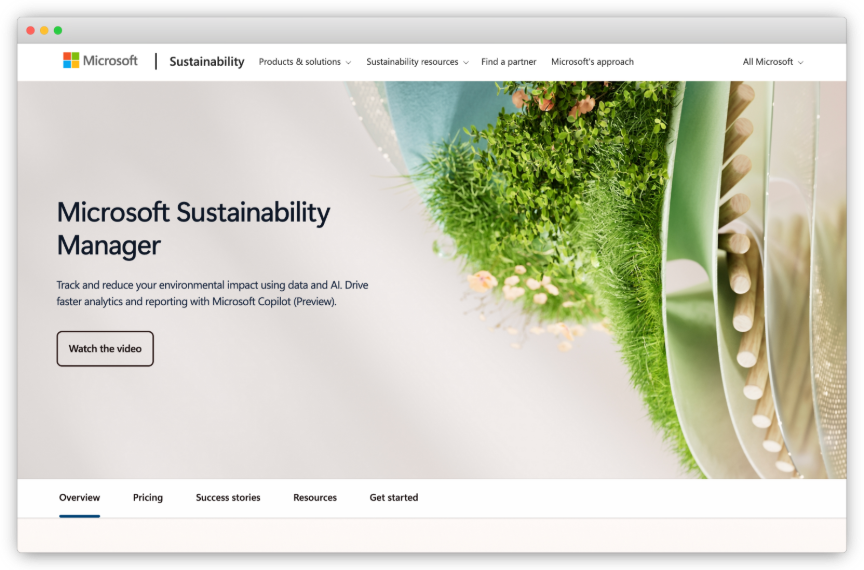
Microsoft Sustainability Manager
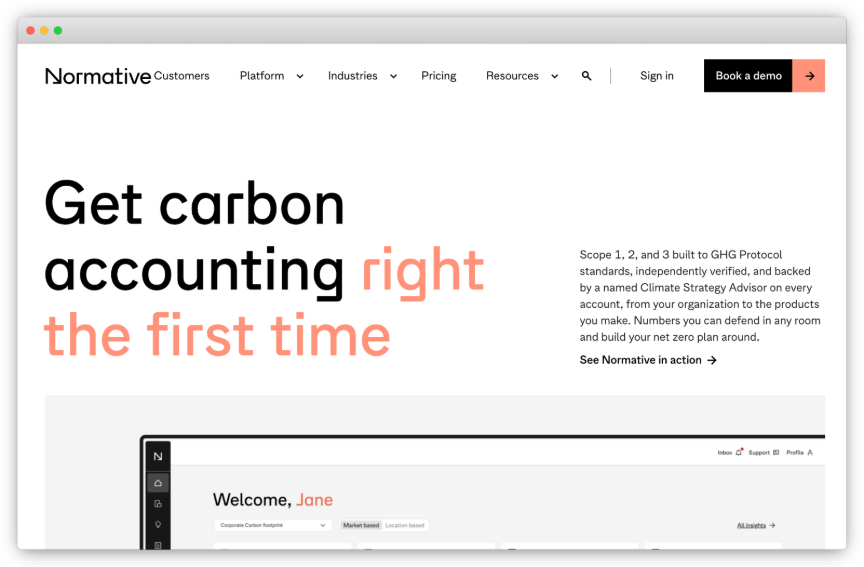
Normative
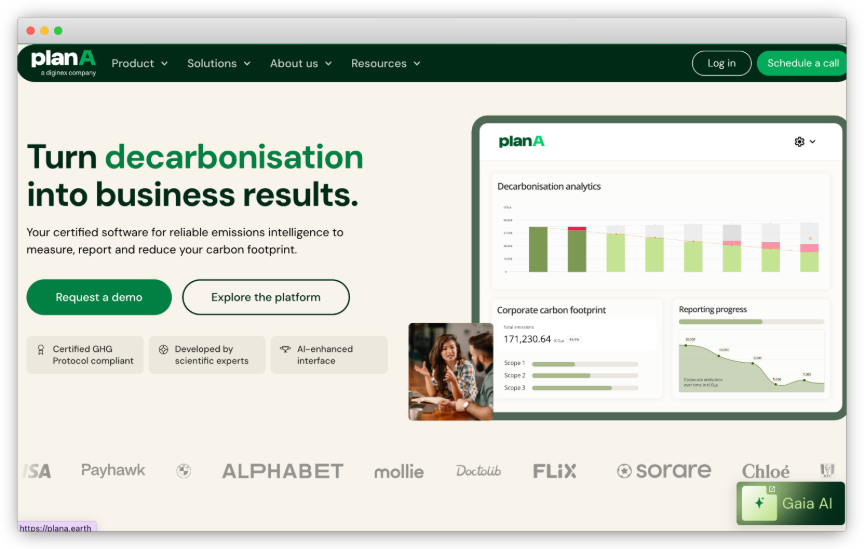
Plan A
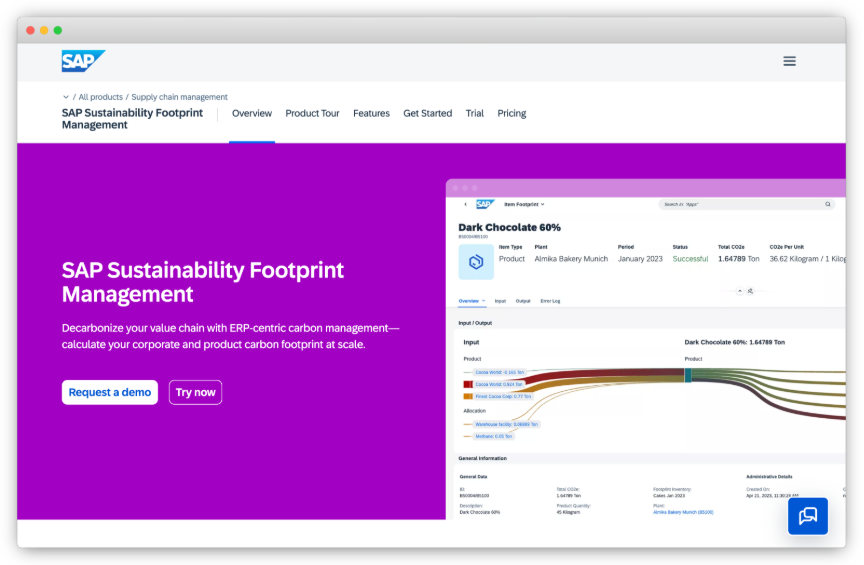
SAP Sustainability Footprint Management
Sphera
Sweep
Read more below and choose the best solution for your unique use case and goals.
The Top 10 Carbon Accounting Software Platforms in Europe
Platform
Pros
Cons
Best For
EcoVadis
Supplier engagement network; scalable evidence and improvement tracking
Not a standalone carbon accounting engine; calculation often via another tool
CSRD-era supplier mobilization at scale
Green Project Technologies
Procurement-led Scope 3 mobilization; supplier actions linked to categories
Best value comes with committed supplier engagement, integration and decarbonizing pathways developed for suppliers.
Procurement-owned supply chain decarb programs
Greenly
Practical Scope 1–3 platform; often fast adoption
Validate enterprise controls and supplier primary data depth
Teams moving off spreadsheets to operationalize carbon management
IBM Envizi
Enterprise governance and audit trails; strong reporting backbone
Implementation effort; supplier engagement varies
Large multi-entity organizations with high assurance needs
Microsoft Sustainability Manager
Flexible data backbone; strong integration potential
Needs clear ownership; supplier engagement usually via adjacent tools
Microsoft-centric architectures building an orchestration layer
Normative
Strong Scope 3/value chain focus; supplier data collection orientation
Supplier participation varies; reduction execution still needs procurement operating model
Value chain engagement and iterative data quality improvement
Plan A
Measure/report/reduce positioning; European regulatory awareness
Validate supplier engagement depth and enterprise integrations
Carbon accounting plus reduction planning in Europe
SAP Sustainability Footprint Management
ERP-linked footprinting; product and corporate footprints
Complex data governance; supplier engagement often separate
SAP-centric enterprises
Sphera
Enterprise governance; strong for industrial contexts
Value chain engagement and collaboration; action tracking
Validate ERP/S2P integrations and controls for assurance
Teams prioritizing collaboration and action tracking across the value chain
1. EcoVadis
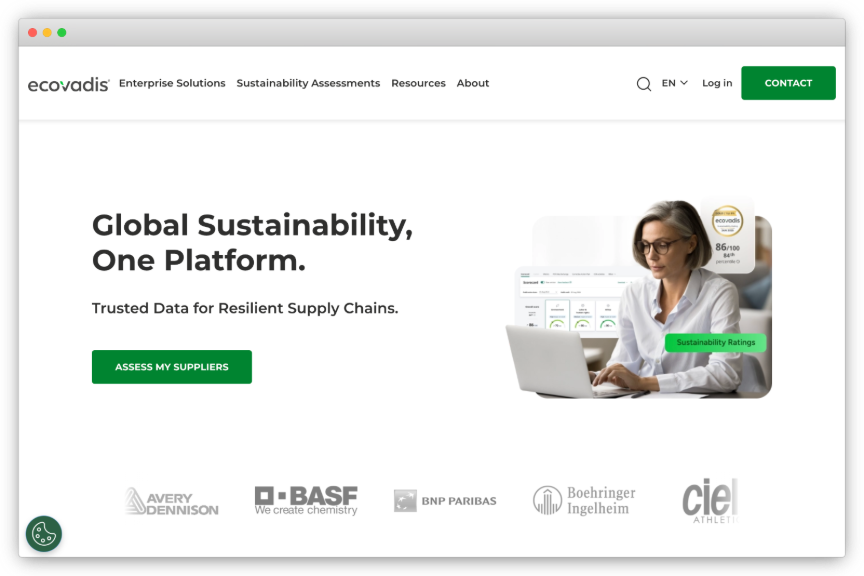
EcoVadis is a Europe-headquartered supplier sustainability assessment and engagement network, widely used by European procurement teams to mobilize suppliers and track improvement actions (including carbon-related content).
For CSRD-era supply chain expectations, EcoVadis is most useful as a supplier engagement layer: it helps scale supplier onboarding, evidence collection, and improvement planning—often paired with a corporate carbon accounting engine for Scope 1–3 calculations.
Core Features
Supplier ratings and evidence workflows
Supplier engagement and improvement planning at scale
Supplier-facing communications and structured data capture
Integration/export patterns into Scope 3 calculations and reporting
Not a standalone corporate carbon accounting engine—often paired with another platform for Scope 1–3 calculations
Depth of primary carbon data exchange varies by supplier maturity
Best For: European procurement teams scaling supplier engagement and evidence collection for Scope 3 programs.
2. Green Project Technologies
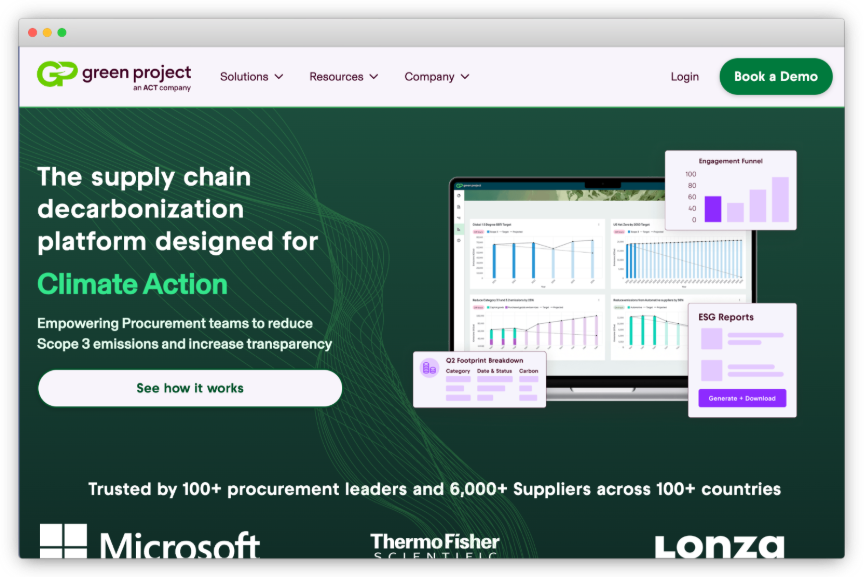
Green Project Technologies focuses on procurement-led supply chain decarbonization: capturing supplier emissions data and turning it into actions, negotiated outcomes, and category-owned abatement pipelines.
In Europe, it is particularly relevant where organizations need to operationalize Scope 3 reduction (beyond reporting) and build a supplier program that can stand up to audit and stakeholder scrutiny.
Core Features
Supplier data collection workflows for Scope 3 (supplier-specific data, activity data, and where relevant, PCFs)
Supplier engagement, targets, and action tracking linked to procurement workflows
Hotspot analytics by supplier, category, and lane
Evidence management to support assurance readiness
Decarbonization action planning and governance reporting
Renewable energy procurement for supply chains
Pros
Strong fit for procurement operating models and Scope 3 reduction programs
Designed to move from ‘measurement’ to ‘supplier action’ (targets, decarbonizing pathway initiative database, tracking)
PCF capability supports product- and material-level decisions in sourcing
SCF capability for services
Cons
Integrations with ERP/S2P stack and master data models may be manual
Category-specific methodology depth for specialized product LCA/EPD workflows may not be built in
Best For: European organizations seeking a procurement-owned Scope 3 program with strong supplier mobilization and action governance.
3. Greenly
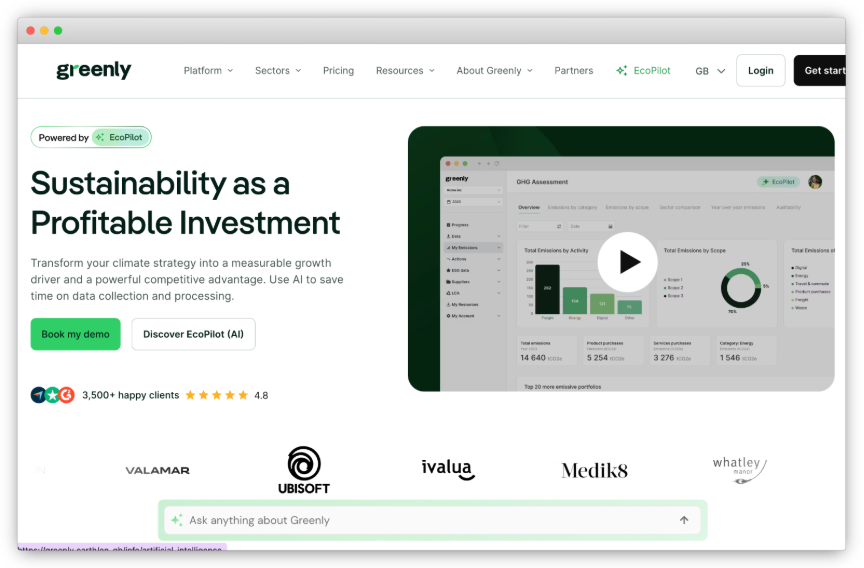
Greenly is a European carbon accounting platform that helps organizations measure and manage Scope 1–3 emissions, with a strong focus on fast adoption and operational usability.
From a procurement perspective, Greenly can be useful when you want a practical platform to move from annual reporting into a repeatable cadence of hotspot identification, supplier engagement, and action tracking.
Core Features
Scope 1–3 emissions calculation and reporting workflows
Data collection workflows for common activity sources (energy, travel, purchasing)
Dashboards for footprint hotspots and progress tracking
Reporting support aligned to common frameworks
Pros
Often faster time-to-value for teams moving off spreadsheets
European context and compliance awareness
Strong usability for broad internal adoption
Cons
Supplier engagement primary data exchange depth may not be sufficient for complex Scope 3 categories
Integrations and controls may not be mature enough for multi-entity complexity
Best For: Mid-market to enterprise teams looking for practical Scope 1–3 carbon accounting with strong usability and European orientation.
4. IBM Envizi
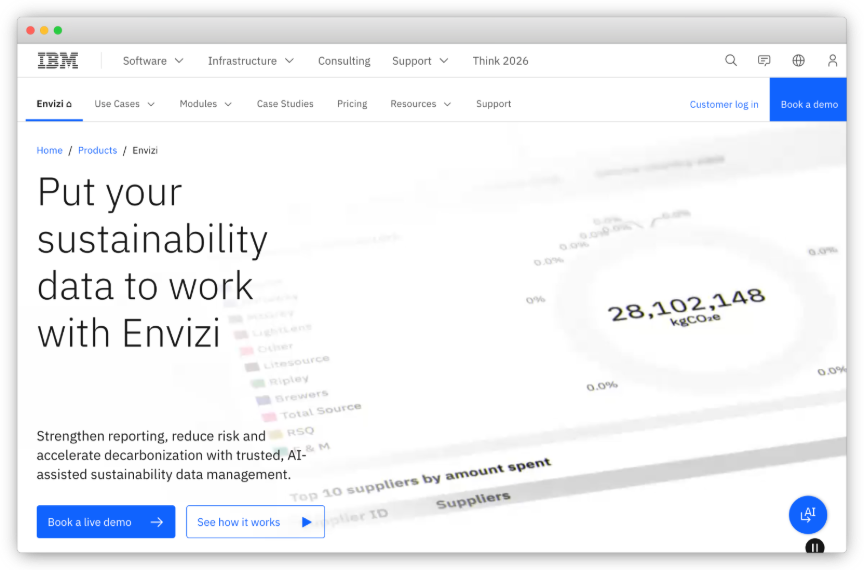
IBM Envizi is an enterprise sustainability data management and reporting platform used by many large organizations across Europe to centralize emissions and ESG datasets and produce audit-ready reporting outputs.
For CSRD-driven reporting and assurance expectations, Envizi is often used as a ‘data backbone’ that can be complemented with supplier engagement solutions for Scope 3.
Core Features
Centralized emissions and activity data management across entities
GHG accounting workflows with audit trails and controls
Reporting outputs aligned to common frameworks
Integration patterns for enterprise systems and data pipelines
Pros
Enterprise-grade data governance and auditability
Strong fit for multi-entity reporting requirements
Good backbone for sustainability data management
Cons
Supplier engagement depth varies by configuration and adjacent tooling
Implementation can be resource-intensive for complex Scope 3 models
Best For: Large European enterprises needing a robust sustainability data backbone and assurance-ready reporting.
5. Microsoft Sustainability Manager
Microsoft Sustainability Manager is commonly used in Europe as a flexible sustainability data backbone, leveraging the Microsoft ecosystem for data integration, workflows, and analytics.
For procurement-led Scope 3 programs, it performs best when paired with clear operating processes and a supplier engagement engine where supplier UX and mobilization matter.
Core Features
Unified sustainability data model and ingestion
Emissions calculations and factor management
Dashboards and analytics for hotspots and performance management
Workflow support via the broader Microsoft stack
Pros
Strong fit for Microsoft-centric architectures
Flexible integration approach for multi-source data
Useful backbone for organizations building an orchestration layer
Cons
Supplier engagement is not the core strength; typically needs adjacent tooling
Requires strong governance to ensure consistent data ownership
Best For: Organizations building a sustainability data layer within the Microsoft ecosystem.
6. Normative
Normative is a European carbon accounting platform with a strong focus on value chain emissions and supplier engagement, helping organizations move from estimates toward higher-quality Scope 3 data.
For procurement teams, Normative is attractive when you want structured supplier data collection workflows and a pragmatic approach to improving Scope 3 quality over time.
Core Features
Scope 1–3 carbon accounting engine with value chain focus
Supplier data collection workflows and supplier network features
Support for improving data quality over time
Dashboards and reporting outputs for stakeholders
Pros
Strong Scope 3 and value chain orientation
Pragmatic operating model for iterative data quality improvement
Well suited to supplier engagement patterns
Cons
Supplier engagement may be manual and time intensive
Reduction execution may still require strong category strategy and operating model
Best For: Teams prioritizing Scope 3 data quality improvement and value chain engagement in a European context.
7. Plan A
Plan A is a European carbon accounting and decarbonization platform positioned around certified GHG Protocol compliance and actionable reduction planning.
From a procurement lens, Plan A is useful when you want to combine auditable carbon accounting with a practical approach to reduction initiatives and tracking across the business and supply chain.
Core Features
Scope 1–3 carbon accounting workflows aligned to recognized standards
Reduction planning and target tracking features
Data collection workflows for common emissions sources
Reporting support and auditability features
Pros
Strong ‘measure → report → reduce’ positioning
European regulatory awareness and market fit
Good option for teams seeking both accounting and reduction planning
Cons
Supplier engagement depth may not be sufficient for large supply bases
Might not be able to handle integrations with complex enterprise stacks
Best For: European organizations that want a combined carbon accounting + reduction planning platform with strong regulatory awareness.
8. SAP Sustainability Footprint Management
SAP Sustainability Footprint Management is typically adopted by European organizations running SAP and seeking to connect emissions and footprinting to ERP, product, and process data.
It can be a powerful backbone for CSRD-era product and corporate footprints—provided the organization invests in data governance and integration.
Core Features
ERP-linked emissions and footprinting for corporate and product footprints
Integration with SAP supply chain and finance data
Support for footprint transparency across products and operations
Governance and reporting workflows within SAP’s sustainability stack
Pros
Strong fit for SAP-led architectures
Connects emissions to operational/product data at scale
Useful foundation for product-level footprinting
Cons
Complex implementation without strong data governance
Supplier engagement typically requires additional tooling
Best For: SAP-centric organizations needing ERP-integrated footprinting and strong linkage to product/process data.
9. Sphera
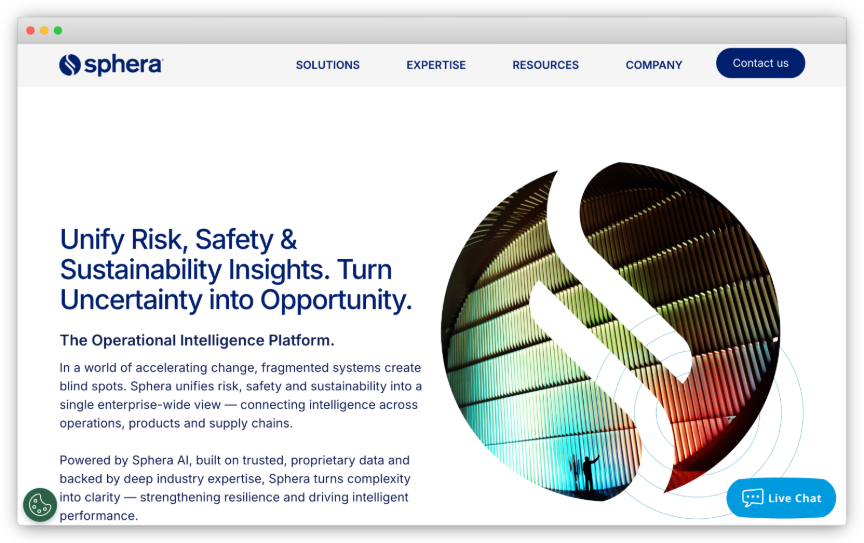
Sphera provides sustainability and risk management software with carbon accounting capability, often used by complex industrial organizations across Europe.
It is relevant where organizations need strong governance, compliance support, and integration with broader EHS and risk workflows—common in regulated European industries.
Core Features
Corporate emissions management and sustainability reporting capabilities
Support for complex organizational structures and governance
Integration with enterprise systems and EHS/risk workflows
Analytics for hotspot identification and performance management
Pros
Enterprise-grade governance for complex organizations
Strong fit where sustainability sits alongside EHS/risk workflows
Often suited to industrial operators
Cons
Supplier engagement depth varies—validate portal, surveys, and supplier UX
Implementation can be resource-intensive
Best For: Industrial and highly regulated organizations needing carbon management integrated with broader governance and risk processes.
10. Sweep
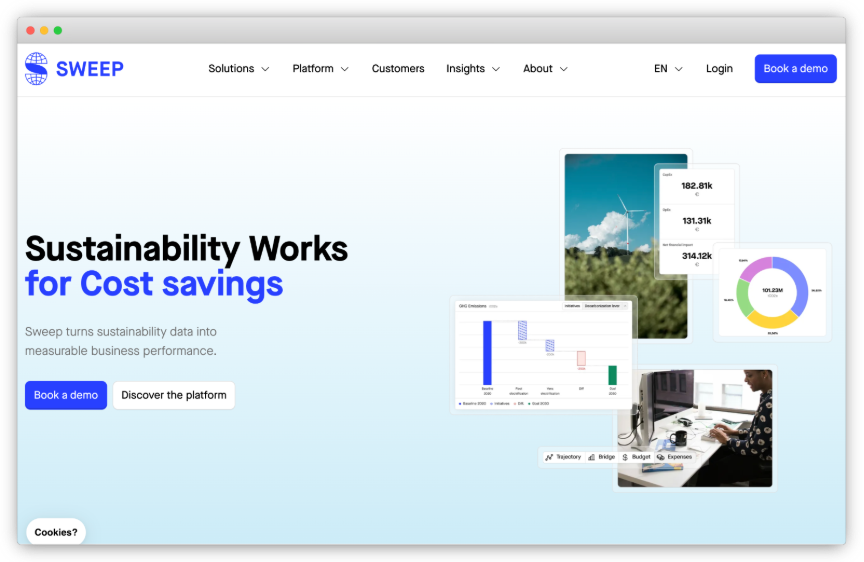
Sweep is a Europe-based sustainability and carbon management platform that emphasizes value chain visibility, engagement, and audit-ready reporting.
For procurement teams, Sweep is often relevant where you need strong collaboration features and a platform that can support supplier engagement and reduction tracking across the value chain.
Core Features
Scope 1–3 measurement workflows and value chain mapping
Supplier and stakeholder engagement features
Action tracking and collaboration workflows to drive reductions
Reporting and evidence features aligned to regulatory expectations
Pros
Strong value chain collaboration narrative
Useful for organizations needing engagement + action tracking
European market fit and compliance awareness
Cons
Integrations with ERP/S2P systems may not be out-of-the-box
Governance and controls may need to be built on top of tool if assurance expectations are high
Best For: Organizations prioritizing value chain engagement, collaboration, and action tracking alongside carbon accounting.
Other Local and Regional Platforms to Watch in Europe
Beyond the ten platforms above, Europe has a deep ecosystem of specialist tools—particularly for CSRD/ESRS reporting workflows, product carbon footprints (PCFs), and LCA/EPD generation. These can be valuable complements to a corporate carbon accounting engine, especially where customers and regulators ask for product-level data.
Position Green (Europe): ESG and sustainability reporting platform with carbon accounting capabilities; often relevant where teams need ESRS reporting workflows plus emissions management.
Climatiq (Europe/global): emissions factor and carbon calculation API used to automate calculations inside data platforms and orchestration layers.
Ecochain (Netherlands): LCA software focused on product footprints, PCFs, and EPD workflows—useful when product-level emissions data is a competitive requirement.
How Procurement Teams Measure and Decarbonize Supply Chains in Europe
Most European organizations will not decarbonize Scope 3 through ‘reporting projects’ alone. The winning pattern is procurement-led: combine a CSRD-ready carbon accounting foundation with a supplier operating model that turns data into negotiated actions—while keeping an audit trail for assurance.
1) Build a credible baseline (fast, then improve)
Start with spend- and activity-based estimates to identify hotspots by category, supplier, and lane.
Define organizational boundaries and Scope 3 category coverage (align to the GHG Protocol).
Set data quality rules and a roadmap to migrate priority categories toward primary data/PCFs where required.
2) Choose your digital architecture
Decide what plays the role of ‘backbone’ (ERP-linked platform such as SAP SFM or a data backbone such as Microsoft Sustainability Manager/Envizi).
Decide what plays the role of ‘supplier engagement engine’ (e.g., Green Project, EcoVadis, Sweep modules).
Design evidence management to support CSRD/ESRS assurance expectations.
3) Segment suppliers and focus where it matters
Priorities suppliers and materials driving the highest emissions and/or compliance exposure.
Align supplier requirements to segmentation (strategic vs tail) and supplier capability.
Build category-level views so category managers can link emissions to specifications, lanes, and commercial levers.
4) Run a supplier mobilization program (not an email campaign)
Provide supplier enablement: templates, calculators, language support, and practical ‘minimum viable reporting’ rules.
Use contracting levers: RFx questions, scorecard weightings, improvement plans, and data-sharing clauses.
Expect iterative improvement: start with estimates, then expand primary data coverage over time.
5) Create an abatement pipeline owned by category managers
Translate hotspots into category strategies (materials substitution, logistics optimization, process improvements, renewable electricity).
Use supplier innovation days / hackathons to co-design reductions and cost savings.
Track actions like a portfolio: owner, timeline, expected tCO2e, cost, risk, and dependencies.
6) Govern, verify, and report (without slowing down)
Implement approvals, evidence management, and controls to prepare for assurance.
Create a repeatable annual cycle that can support CSRD/ESRS reporting and supplier program governance.
Document methodology and factor changes to keep year-on-year comparisons defensible.
From Measurement to Meaningful Reduction in Europe
Across Europe, carbon accounting is no longer just a reporting exercise. Reporting requirements are raising the bar for auditability, while customers and investors are pushing for credible, measurable progress on Scope 3 emissions.
The organizations making real progress are moving beyond standalone measurement tools and building integrated operating models. That means combining a reliable carbon accounting backbone with supplier engagement, procurement ownership, and clear pathways from data to action.
No single platform delivers this on its own. The right approach depends on your regulatory exposure, internal data maturity, and supplier landscape. Some teams need to establish a defensible baseline quickly, while others are ready to drive category-level reduction strategies and track outcomes across complex, multi-tier supply chains.
What is consistent across leading European programs is this: emissions data is only valuable when it leads to decisions. Supplier segmentation, contracting levers, and coordinated decarbonization initiatives are what ultimately translate carbon visibility into measurable reduction.
The next phase of carbon accounting in Europe will be defined by execution. Platforms that enable procurement teams to act, not just report, will be the ones that support durable, audit-ready Scope 3 reduction at scale.
Note: The information in this article is based on publicly available sources at the time of writing. Vendor capabilities evolve quickly, so we recommend reviewing each provider’s website for the most current product information.