


Carbon accounting across the Middle East has entered a new phase. Sustainability and climate disclosures are moving from voluntary reporting to increasingly structured, regulator-led expectations driven by capital market guidance, investor scrutiny, and multinational customer requirements.
At the same time, 79% of CEOs in the Middle East report having a sustainability strategy in place, and with Scope 3 emissions often accounting for the majority of corporate footprints, supply chain decarbonization is quickly becoming the primary lever for meaningful emissions reduction.
Recent regulations have also pushed Middle Eastern companies to act. Consider:
Below are ten leading carbon accounting platforms that can support organizations operating in the Middle East in 2026, presented in alphabetical order:
This list reflects a mix of global enterprise platforms and regionally focused solutions that are actively supporting carbon accounting and decarbonization programs in the Middle East.
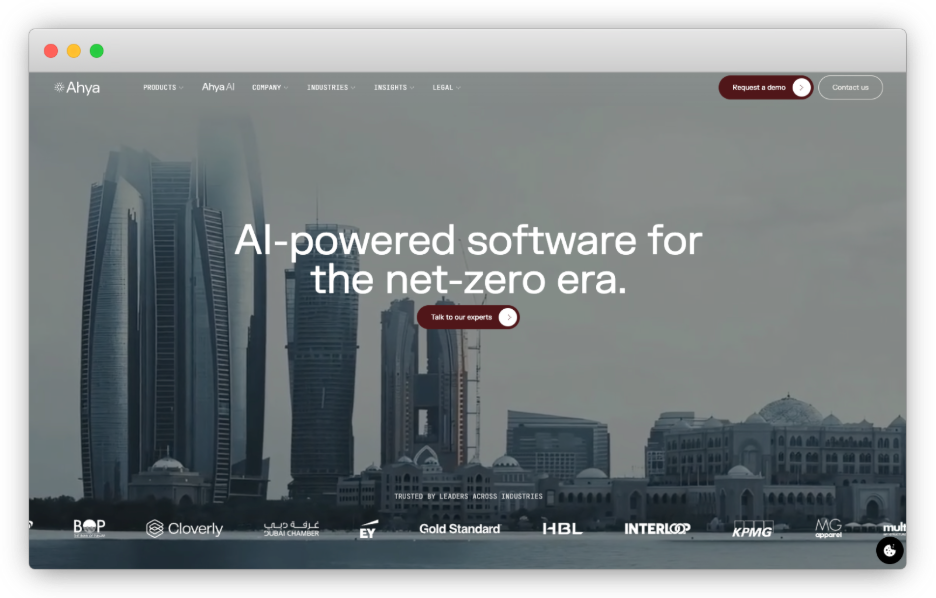
Ahya is an AI-powered sustainability software provider operating across the MENAP region (including the UAE and Saudi Arabia), with products positioned around carbon management and accounting for the net‑zero era.
It is particularly relevant for financial institutions and finance‑exposed corporates because Ahya has been publicly recognized in relation to PCAF (Partnership for Carbon Accounting Financials) accreditation/partner activity, supporting financed emissions governance needs alongside corporate carbon management.
Core Features
Pros
Cons
Best For: MENAP financial institutions and corporates seeking regionally relevant carbon accounting with PCAF-oriented capabilities and local proximity.
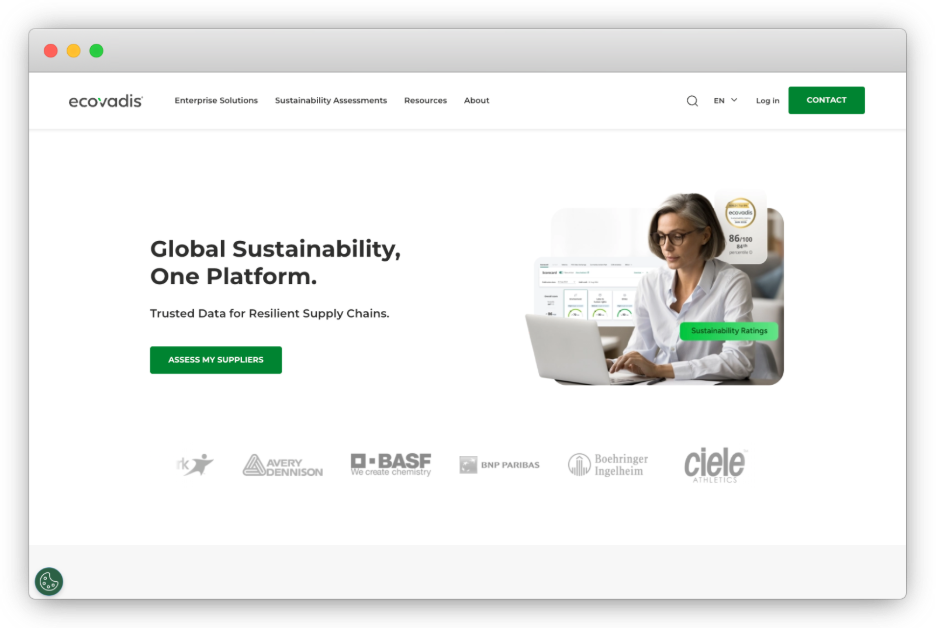
EcoVadis is a sustainability intelligence and supplier engagement platform widely used in procurement-led sustainable sourcing programs. Its Carbon Solution (including Carbon Action Manager) focuses on scaling supplier emissions data collection and helping procurement teams drive supplier decarbonization at scale.
EcoVadis is often paired with a separate enterprise carbon accounting tool for Scope 1–2 and consolidated enterprise reporting, while EcoVadis is used to engage and mature the supplier base for Scope 3.
Core Features
Pros
Cons
Best For: Organizations prioritizing supplier engagement, scalable Scope 3 primary data collection, and procurement-led supplier decarbonization programs.
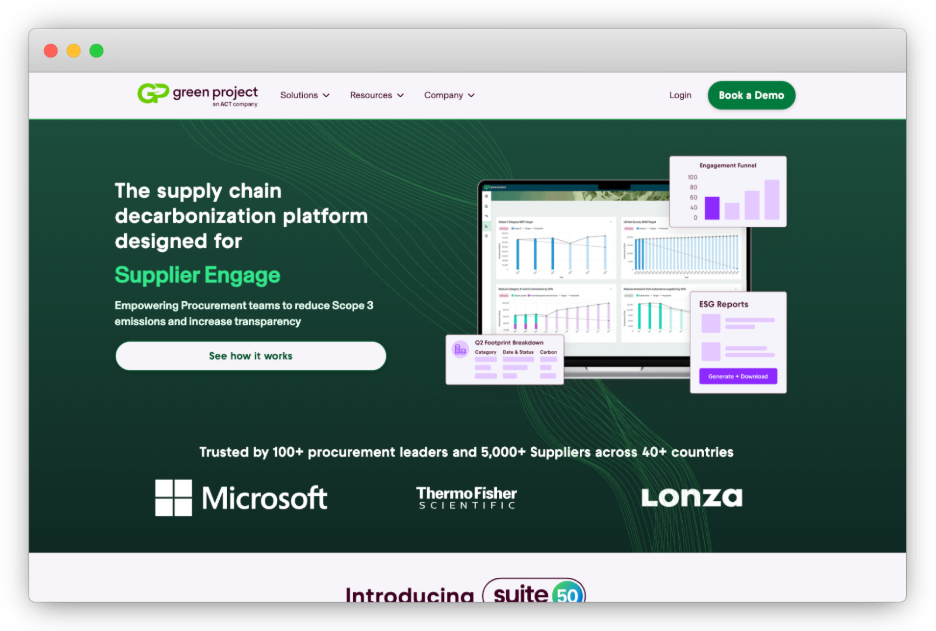
Green Project Technologies positions itself as a carbon accounting software and supply-chain decarbonization platform built for procurement-led Scope 3 programs. It supports Scope 1-3 accounting and places particular emphasis on supplier data access, verification workflows, and actionable procurement levers.
In 2025, Green Project Technologies acquired Emitwise’s Scope 3 software capabilities, bringing additional supply-chain emissions features under the Green Project platform.
Core Features
Pros
Cons
Best For: Organizations seeking an integrated, procurement-led Scope 3 platform with structured supplier engagement and action tracking.
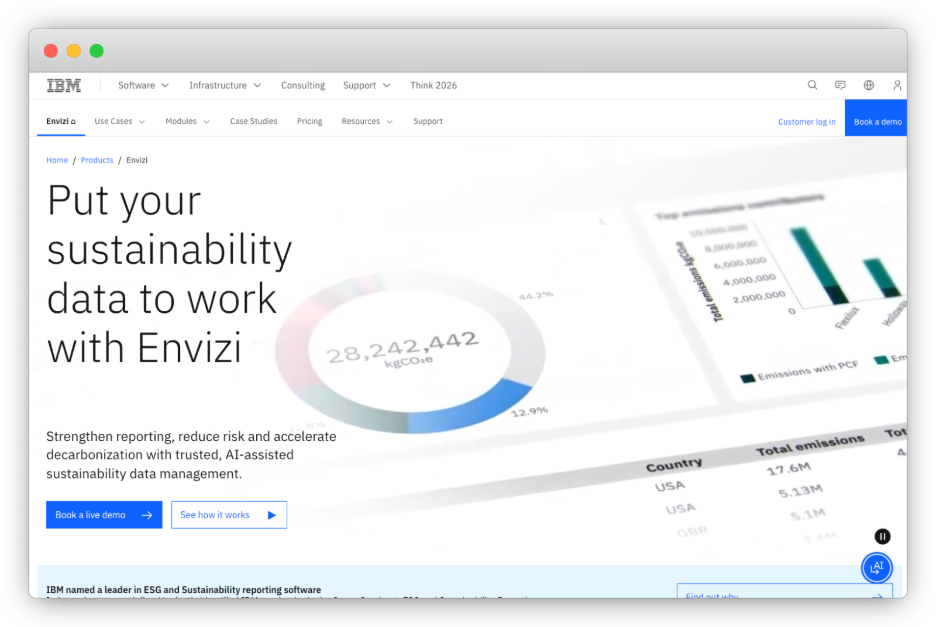
IBM Envizi is a sustainability data management and carbon accounting software platform designed to consolidate large volumes of sustainability data into an auditable system of record.
Envizi is often used by enterprises with complex, multi-entity structures that need strong governance, data lineage, and reporting automation across Scope 1–3.
Core Features
Pros
Cons
Best For: Large enterprises needing robust sustainability data management and governance across multi-entity operations, with Scope 3 expansion over time.
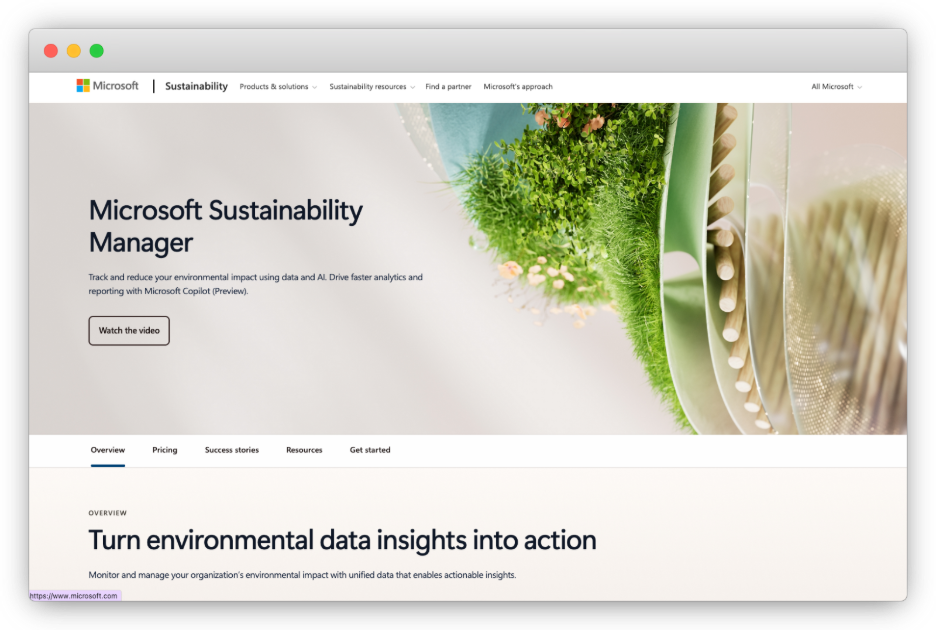
Microsoft Sustainability Manager is part of Microsoft’s sustainability suite designed to help organizations record, report, and reduce environmental impacts using unified data and automation.
It includes capabilities to store activity data and calculate Scope 3 emissions, with emission factor libraries and support for custom factors where needed.
Core Features
Pros
Cons
Best For: Organizations already standardizing on Microsoft data platforms and seeking an extensible carbon accounting foundation with Scope 3 coverage.
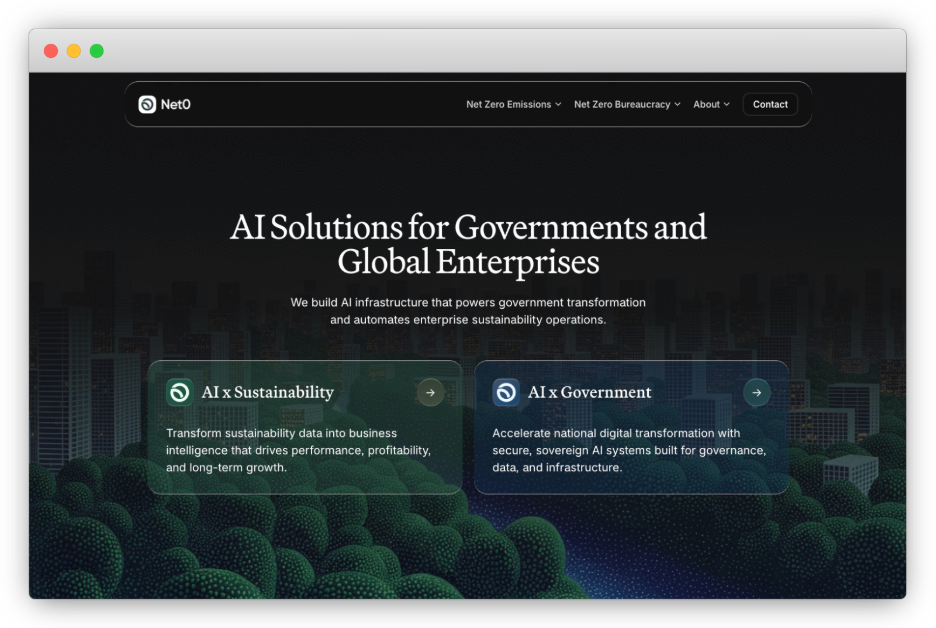
Net0 positions itself as an AI‑native sustainability and carbon accounting platform for governments and enterprises, with offices in Dubai. Its product positioning emphasizes automated data collection, audit-ready datasets, and dashboards spanning emissions and broader ESG reporting frameworks.
Core Features
Pros
Cons
Best For: Middle Eastern organizations seeking a region-present platform combining carbon accounting with automated data collection and ESG reporting workflows.
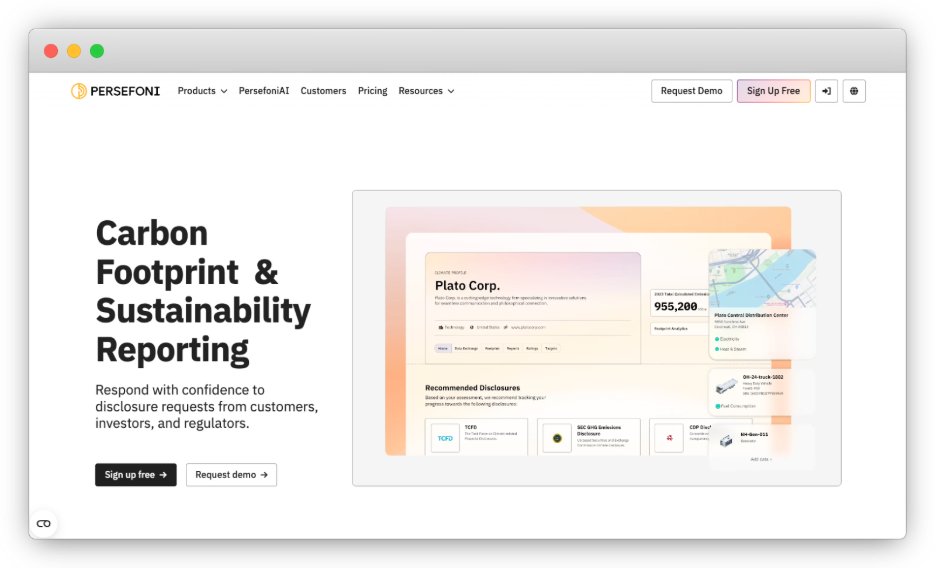
Persefoni is a carbon accounting and climate disclosure platform positioned for investor-grade and audit-ready reporting. It emphasizes alignment to trusted carbon accounting standards and disclosure frameworks.
Persefoni also maintains a climate disclosure policy library intended to help users navigate evolving reporting requirements.
Core Features
Pros
Cons
Best For: Organizations that need investor-grade carbon accounting and disclosure alignment, particularly where assurance is on the near-term roadmap.
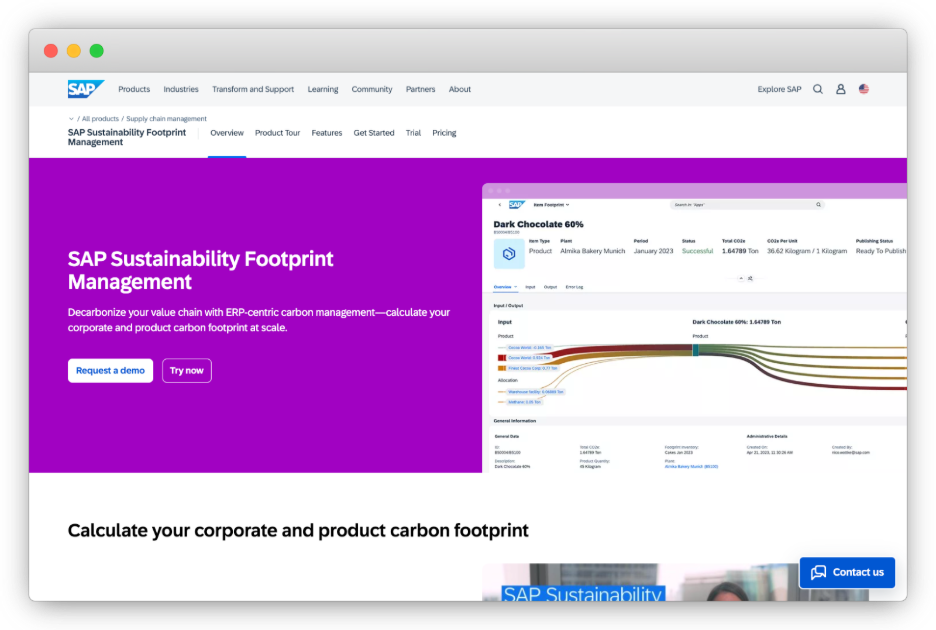
SAP Sustainability Footprint Management is designed to calculate and manage corporate, value chain, and product carbon footprints (Scope 1–3) at scale, particularly for organizations running SAP business processes.
It can be relevant in the Middle East where SAP is widely deployed in energy, manufacturing, construction, and logistics.
Core Features
Pros
Cons
Best For: SAP-centric organizations seeking to calculate corporate and product footprints using operational and transactional data, with strong links into supply-chain processes.
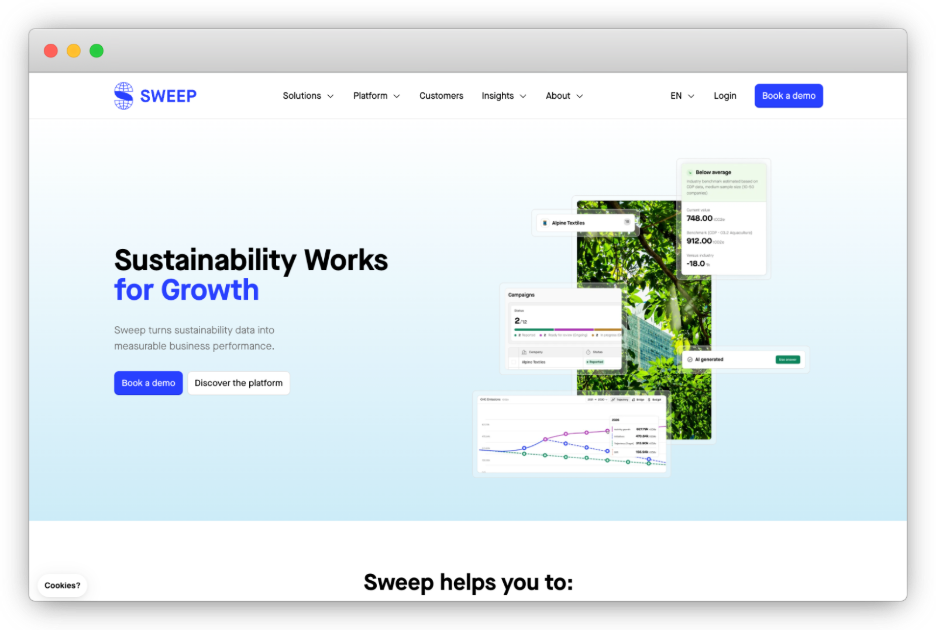
Sweep is a sustainability data and carbon accounting platform that positions itself around measuring, reporting, and reducing emissions across Scope 1–3 with automated data collection and audit-ready outputs.
Sweep also publishes practical supplier engagement guidance focused on closing Scope 3 data gaps and enabling collaborative action.
Core Features
Pros
Cons
Best For: Organizations seeking a modern sustainability data platform with strong Scope 3 workflows and a balance of measurement, reporting, and reduction features.
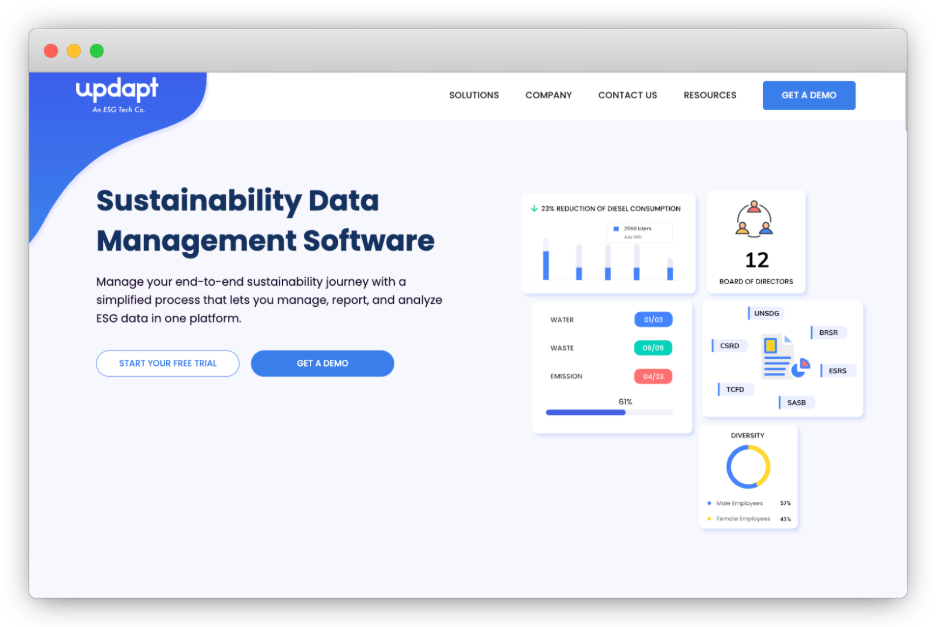
Updapt positions itself as an ESG and sustainability data management software provider with modules spanning ESG reporting and net‑zero/emissions management, and it lists a Dubai office location alongside other global offices.
For Middle East programs, it can be relevant where organizations want a workflow that links ESG reporting automation with carbon emissions measurement and reduction tracking.
Core Features
Pros
Cons
Best For: Organizations prioritizing ESG reporting automation and seeking an integrated workflow that includes emissions management and net‑zero tracking, with Dubai-based support.
Choosing a carbon accounting platform requires more than comparing feature lists. The best platforms combine compliance-grade accounting with practical supplier enablement and a deep comprehension of Middle East-specific regulations and expectations.
Here are the key factors to evaluate.
A strong platform should support core global standards while remaining flexible enough to map to local and sector guidance, such as:
For most organizations, Scope 3 is the main challenge. Avoid platforms that only support spend-based estimation without a path to primary data and supplier engagement. Instead, look for:
Middle East organizations often run complex ERP and finance stacks (SAP, Oracle, Dynamics). Data automation reduces the cost of maintaining audit-ready inventories. Consider:
Measurement alone does not reduce emissions. The most useful platforms help procurement and sustainability teams convert carbon insights into decisions and reductions with:
The Middle East carbon accounting landscape is evolving quickly, but unevenly. Regulatory requirements and capital market expectations are tightening in pockets of the region, while many organizations are still building foundational capabilities alongside complex, globally distributed supply chains. At the same time, multinational customer requirements, particularly around Scope 3 and product footprints, continue to accelerate.
No single platform is right for every organization. The best solution depends on regulatory exposure, internal data capabilities, and where suppliers sit on the carbon maturity ladder, which in the Middle East can vary significantly across sectors such as energy, construction, logistics, and finance.
Some organizations need foundational spend-based reporting, while others require supplier-specific allocation, product carbon footprinting, and coordinated reduction planning.
Measurement is the starting point, not the destination. In a region shaped by carbon-intensive industries and global trade flows, emissions reductions depend on procurement-led execution: supplier segmentation, contract requirements, incentives, data standardization, and the ability to track real reduction outcomes across categories.
Platforms that combine carbon accounting with supplier enablement and actionable decarbonization workflows are increasingly positioned to support the next phase, moving from disclosure to measurable Scope 3 reduction across complex regional and international supply chains.
Note: The information in this article is based on publicly available sources at the time of writing. Vendor capabilities evolve quickly, so we recommend reviewing each provider’s website for the most current product information.
