State-level climate disclosure laws and investor expectations are increasing the demand for audit-ready emissions data in the United States—especially for Scope 3, where procurement owns the levers.
In this guide, we explore ten carbon accounting software platforms relevant for organizations operating in the US, presented in alphabetical order: EcoVadis, Green Project Technologies, IBM Envizi, Microsoft Sustainability Manager, Persefoni, Salesforce Net Zero Cloud, SAP Sustainability Footprint Management, SINAI Technologies, Sphera, and Watershed.
Carbon accounting software adoption in the United States is being shaped by three converging pressures: investor expectations, state-level climate disclosure laws requiring greenhouse gas emissions and climate risk reporting, and global customer and lender demand for credible Scope 3 data.
The practical procurement challenge is that Scope 3 is typically the largest share of emissions, and it lives in supplier data, materials, logistics, and specifications. The right platform needs to do more than compute tCO2e. It needs to help procurement teams mobilize suppliers, improve data quality over time, and turn hotspot analysis into negotiated reduction actions.
Here are our top 10 carbon accounting software platforms, listed in alphabetical order:
EcoVadis
Green Project Technologies
IBM Envizi
Microsoft Sustainability Manager
Persefoni
Salesforce Net Zero Cloud
SAP Sustainability Footprint Management
SINAI Technologies
Sphera
Watershed
Each solution offers a different balance of regulatory alignment, Scope 3 capability, supplier engagement tooling, and decarbonization planning. The right choice depends on your operating model, data maturity, and technology stack.
Read more below and choose the best solution for your unique use case and goals.
The Top 10 Carbon Accounting Software Platforms in the United States
Platform
Pros
Cons
Best For
EcoVadis
Supplier engagement network; scalable assessments and improvement tracking
Not a standalone corporate carbon accounting engine; Scope 3 calculation needs pairing
Large supplier bases needing structured engagement
Green Project Technologies
Procurement-led Scope 3 mobilization; supplier actions linked to categories
Best value comes with committed supplier engagement, integration and decarbonizing pathways developed for suppliers.
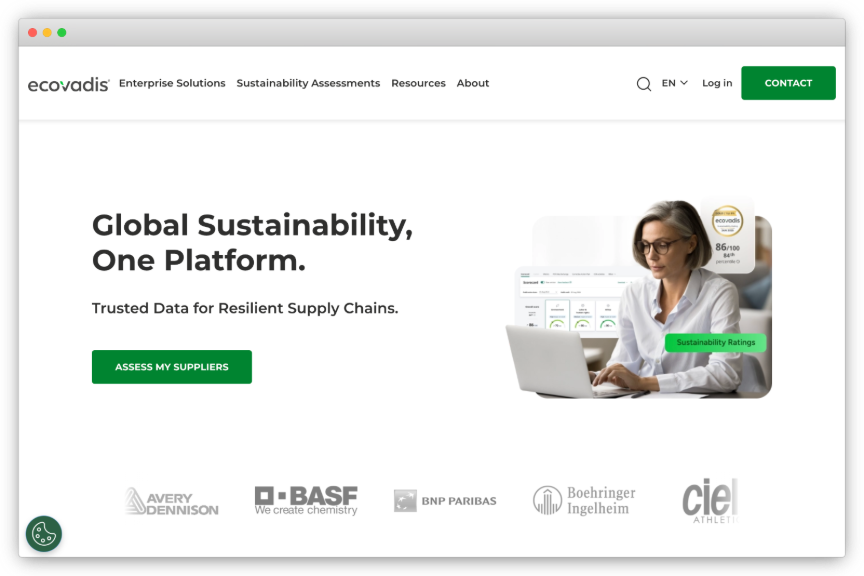
EcoVadis is widely used in the US as a supplier sustainability assessment and engagement network. In carbon terms, it is most relevant as a way to mobilize suppliers, collect supplier-specific carbon maturity data, and track improvement actions (often alongside a separate corporate carbon accounting engine).
From a procurement lens, EcoVadis is typically strongest when you want a scalable supplier program: segmentation, invitations, nudges, scorecards, and evidence workflows—then you connect the outputs into Scope 3 calculations and category strategies.
Core Features
Supplier sustainability ratings and evidence workflows (including carbon-related content)
Supplier engagement and improvement planning at scale
Carbon Action Manager-style workflows for supplier action tracking (validate feature set for your program)
Data export / integration patterns to feed corporate Scope 3 calculations and reporting
Pros
Strong supplier engagement “engine” for large supplier bases
Creates a repeatable supplier operating rhythm (assessment → action plan → progress)
Useful for procurement-led mobilization beyond a single reporting cycle
Cons
Not a full corporate carbon accounting engine by itself—often paired with another platform for Scope 1–3 calculations
Depth of primary data exchange for product footprints varies by supplier capability
Best For: Procurement teams running large supplier engagement programs who need structured supplier workflows and improvement tracking.
2. Green Project Technologies
Green Project Technologies (an ACT Group company) focuses on procurement-led supply chain decarbonization: turning supplier emissions data into supplier actions, negotiated outcomes, and category-owned abatement pipelines.
It is most relevant in the US when Scope 3 performance is a commercial and risk priority—especially where organizations need to move from estimation to supplier-specific (and sometimes product-specific) data, with an operating model that suppliers can actually follow.
Core Features
Supplier data collection workflows for Scope 3 (supplier-specific data, activity data, and where relevant PCFs)
Supplier engagement, targets, and action tracking linked to procurement workflows
Analytics to priorities hotspots by supplier, category, and lane
Evidence management to support audit/assurance readiness
Decarbonization action planning and governance reporting
Renewable energy procurement for supply chains
Pros
Strong fit for procurement operating models and Scope 3 reduction programs
Designed to move from ‘measurement’ to ‘supplier action’ (targets, decarbonizing pathway initiative database, tracking)
Product Carbon Footprint capability supports product- and material-level decisions in sourcing
Supplier Carbon Footprint capability for services
Cons
May have to validate fit with your ERP/data backbone and integration approach (data architecture matters)
For highly complex product LCA/EPD workflows, you may have to confirm the necessary depth of PCF methodology support for your categories
Best For: US organizations that want a procurement-owned Scope 3 program with strong supplier mobilization and action governance.
3. IBM Envizi
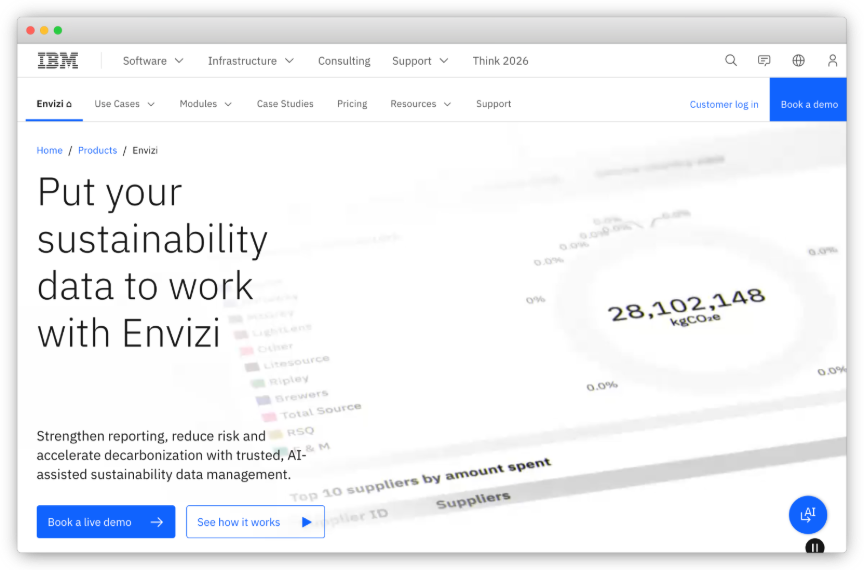
IBM Envizi is an enterprise sustainability data management and reporting platform used by many large organizations to centralize emissions, energy, and ESG datasets and produce audit-ready reporting outputs.
From a supply chain perspective, Envizi is often used as a ‘data backbone’ for emissions management, with Scope 3 capabilities that can be enhanced through integrations, supplier tools, and process design.
Core Features
Centralized emissions and activity data management across entities
GHG accounting workflows with audit trails and controls
Reporting outputs aligned to common frameworks (validate the set relevant to you)
Integration patterns for enterprise systems and data pipelines
Pros
Enterprise-grade data governance and auditability
Strong fit for multi-entity organizations with complex reporting requirements
Good option as a backbone for sustainability data management
Cons
Supplier engagement depth varies by configuration and adjacent tooling
Can require non-trivial implementation effort for complex Scope 3 models
Best For: Large enterprises that need a robust sustainability data backbone with strong governance and reporting.
4. Microsoft Sustainability Manager
Microsoft Sustainability Manager is commonly used as a data backbone for sustainability metrics, leveraging Microsoft’s ecosystem for data integration, workflows, and analytics.
For procurement and Scope 3 teams, it is most powerful when paired with clear operating processes (who collects what, how often, and with what evidence) and a supplier engagement solution where needed.
Core Features
Sustainability data model and unified data ingestion (connectors + custom integration)
Emissions calculation and factor management capabilities
Dashboards and analytics for hotspots and performance management
Workflow support via the broader Microsoft stack
Pros
Strong fit for organizations already invested in Microsoft data/analytics tooling
Flexible architecture for multi-source data integration
Useful backbone when paired with supplier engagement tooling
Cons
Supplier engagement is not the core strength; often needs adjacent supplier tooling
Requires clear governance to avoid becoming a “data lake with no owners”
Best For: Organizations looking for a flexible data backbone integrated into the Microsoft ecosystem.
5. Persefoni
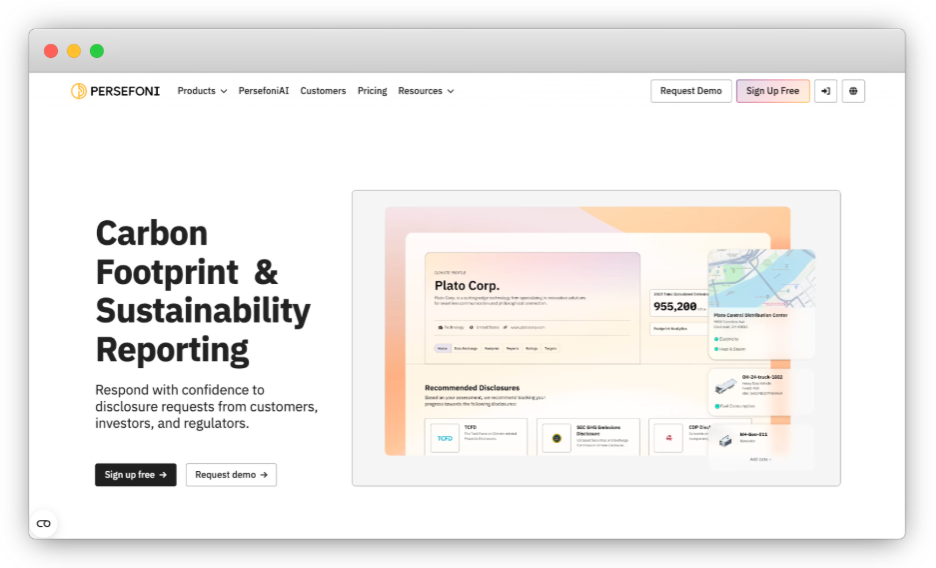
Persefoni positions itself around investor-grade carbon accounting, helping organizations produce auditable emissions inventories and disclosures aligned to recognized standards.
In the US, it is frequently considered where finance and audit stakeholders want strong controls and traceability, especially when preparing assurance-ready reporting.
Core Features
Scope 1–3 carbon accounting workflows aligned to established methodologies
Audit trails, controls, and repeatable reporting cycles
Integration and data ingestion from common enterprise sources
Dashboards and reporting outputs for stakeholders
Pros
Strong governance and auditability orientation
Suitable for organizations with high disclosure/assurance expectations
Good for building a disciplined annual reporting process
Cons
Supplier engagement depth depends on configuration and program design
Reduction planning capabilities may require complementary tools/processes
Best For: Finance- and audit-led organizations that need a highly controlled, assurance-ready carbon accounting process.
6. Salesforce Net Zero Cloud
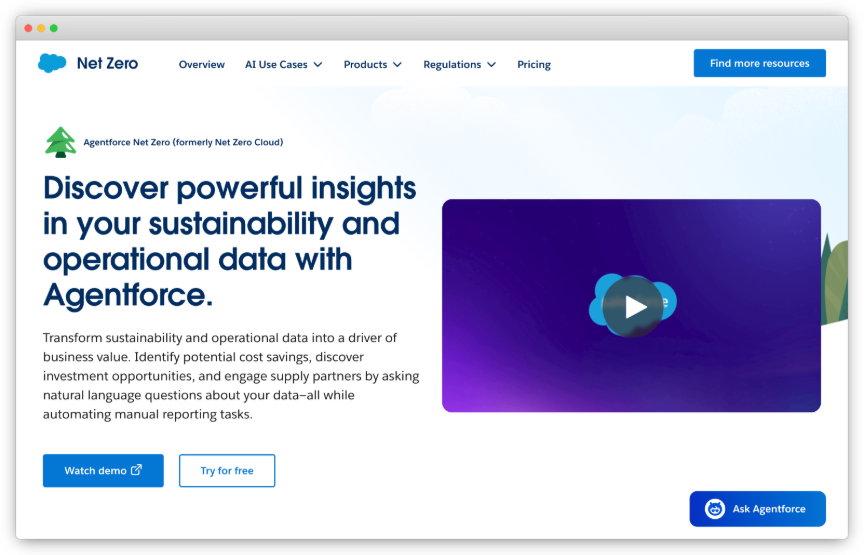
Salesforce Net Zero Cloud (also marketed as Agentforce Net Zero) is a carbon accounting capability built on the Salesforce platform, designed to track Scope 1–3 emissions and connect sustainability data into broader business workflows.
For procurement, its practical advantage is being CRM-native: it can connect supplier, customer, and operational objects and workflows in one ecosystem—if you already run Salesforce at scale.
Core Features
Scope 1–3 emissions tracking and environmental data management
Supplier engagement and data collection workflows
Automation and workflow capabilities via the Salesforce platform
Reporting support aligned to common frameworks
Pros
Strong option for Salesforce-centric operating models
Good workflow and user experience capabilities when configured well
Can link sustainability data to commercial/account management processes
Cons
Implementation quality and data model design are critical (avoid “custom object sprawl”)
May require complementary carbon expertise and emissions factor governance
Best For: Enterprises heavily invested in Salesforce that want carbon accounting embedded in business workflows.
7. SAP Sustainability Footprint Management
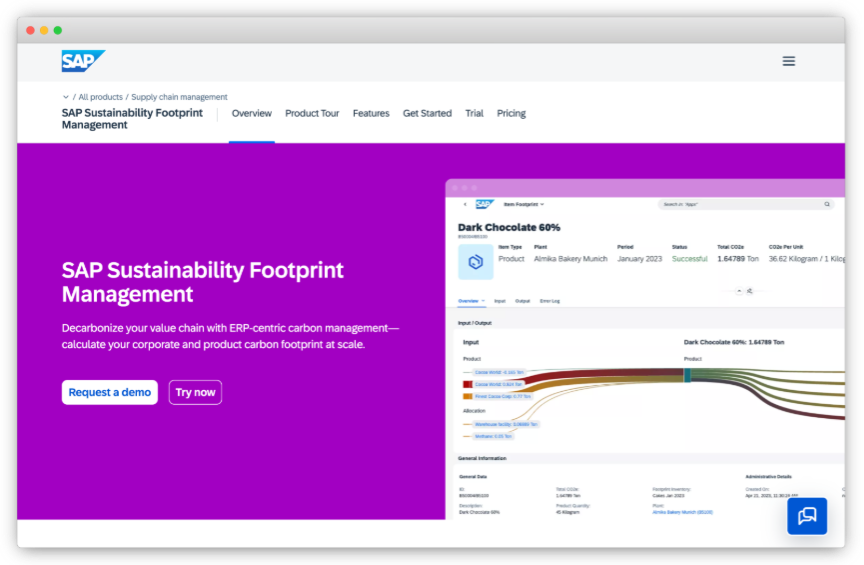
SAP Sustainability Footprint Management (SFM) is typically adopted by organizations already running SAP and looking to connect emissions and footprinting to ERP and product/process data.
For supply chain decarbonization, SAP SFM can be a powerful backbone for product and corporate footprints—provided the organization invests in data quality, master data, and governance.
Core Features
ERP-linked emissions and footprinting capability for corporate and product footprints
Integration with SAP data objects and supply chain data flows
Support for footprint transparency across products and operations
Governance and reporting workflows when used as part of SAP’s sustainability stack
Pros
Strong fit for SAP-led enterprise architectures
Can connect emissions calculations to operational/product data at scale
Good backbone for organizations pursuing product-level footprinting
Cons
Can be complex to implement without strong data governance
Supplier engagement may require additional tooling and program design
Best For: SAP-centric organizations that want footprinting integrated into ERP and product/supply chain data.
8. SINAI Technologies
SINAI is known for combining carbon accounting with abatement and decarbonization planning, helping teams translate emissions baselines into reduction scenarios and investment decisions.
From a procurement viewpoint, SINAI is most useful when category managers and sustainability teams need a clear ‘abatement pipeline’ view (what actions reduce how much, by when, and at what cost).
Core Features
Emissions management combined with marginal abatement cost and scenario planning
Reduction forecasting and tracking tied to initiatives
Support for governance and stakeholder reporting
Integration approach for ingesting operational and supplier data
Supports decision-making on where to invest to reduce emissions
Useful bridge between sustainability and finance conversations
Cons
Still requires good underlying data collection processes for credible outputs
Supplier engagement workflows may need complementary tooling
Best For: Organizations prioritising abatement planning and investment decision support alongside carbon accounting.
9. Sphera
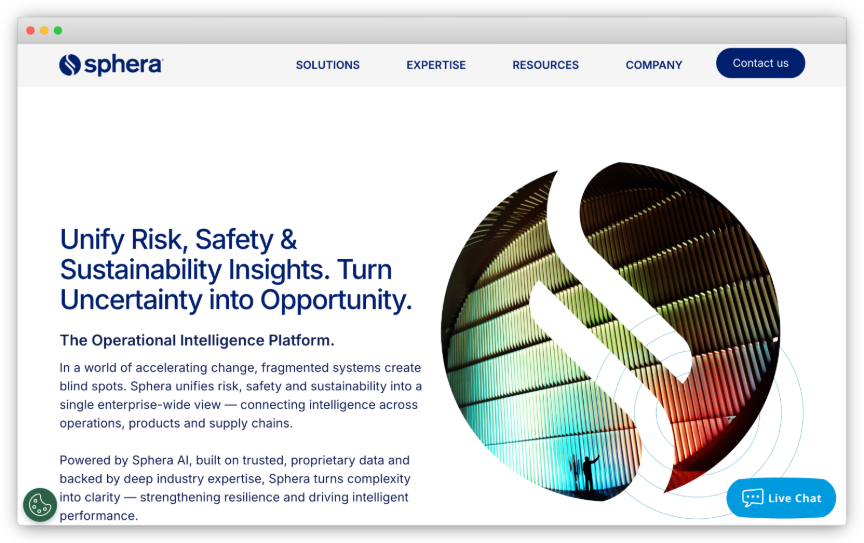
Sphera provides sustainability and risk management software with carbon accounting capability, often used by complex industrial organizations.
In US-heavy industrial supply chains, Sphera can be relevant where organizations need strong governance, compliance, and integration with broader EHS/risk workflows.
Core Features
Corporate emissions management and sustainability reporting capabilities
Support for complex organizational structures and governance
Integration with enterprise systems and EHS workflows
Analytics for hotspot identification and performance management
Pros
Enterprise-grade governance and suitability for complex organizations
Strong fit where sustainability sits alongside EHS/risk workflows
Often familiar to industrial operators
Cons
Supplier engagement capability varies
Implementation can be resource-intensive
Best For: Industrial and highly regulated organizations needing carbon management integrated with broader sustainability/EHS governance.
10. Watershed
Watershed is a climate platform used by many large organizations to measure emissions, engage suppliers, and build credible decarbonization plans.
In the US, it is frequently shortlisted for Scope 3-heavy programs where organizations need supplier data workflows, analytics, and a clear path from measurement to reduction execution.
Core Features
Scope 1–3 measurement and carbon accounting workflows
Supplier engagement and data collection capabilities for Scope 3
Reduction planning and tracking for initiatives and targets
Reporting outputs and evidence management for disclosure needs
Pros
Strong end-to-end narrative from measurement to reduction planning
Good option for Scope 3 programs where supplier workflows matter
Often used by fast-moving teams that want to operationalize quickly
Cons
Validate integration depth with your ERP/S2P stack (especially if you need automated category data flows)
For highly specialized product LCAs, confirm methodology support for your categories
Best For: Enterprises with significant Scope 3 exposure that want strong supplier engagement plus reduction planning in one platform.
Other Platforms to Watch in the United States
Beyond the ten platforms above, the US has a large ecosystem of specialist tools and hybrid (software + services) providers. These can be highly effective for specific sectors (real estate, public sector, heavy industry) or for mid-market adoption.
Optera: carbon management and reporting software with advisory heritage; can be practical for organizations that want software plus structured expert support.
Sustain.Life (now under Workiva): software for measuring and managing emissions, often positioned for mid-market organizations.
Measurabl: strong in real-estate sustainability and building performance; relevant where Scope 1–2 building data dominates the footprint.
nZero (Now under Asuene): real-time energy and emissions intelligence oriented around granular operational data and optimization.
Climatiq: emissions factor and calculation API that many teams embed into data pipelines—useful if you are building a custom backbone or orchestration layer.
How Procurement Teams Measure and Decarbonize Supply Chains in the United States
Most organizations will not decarbonize Scope 3 through ‘reporting projects’ alone. The winning pattern is procurement-led: combine a compliance-ready carbon accounting foundation with a supplier operating model that turns data into negotiated actions—while keeping an audit trail for assurance.
1) Build a credible baseline (fast, then improve)
Start with spend- and activity-based estimates to identify hotspots by category, supplier, and lane.
Define organizational boundaries and Scope 3 category coverage (align to the GHG Protocol).
Set data quality rules and a roadmap to migrate priority categories toward primary data/PCFs where required.
2) Choose your digital architecture
Decide what plays the role of ‘backbone’ (ERP-linked platform such as SAP SFM or a data backbone such as Microsoft Sustainability Manager/Envizi).
Decide what plays the role of ‘supplier engagement engine’ (e.g., Green Project, EcoVadis, Sweep modules).
Design evidence management to support CSRD/ESRS assurance expectations.
3) Segment suppliers and focus where it matters
Priorities suppliers and materials driving the highest emissions and/or compliance exposure.
Align supplier requirements to segmentation (strategic vs tail) and supplier capability.
Build category-level views so category managers can link emissions to specifications, lanes, and commercial levers.
4) Run a supplier mobilization program (not an email campaign)
Provide supplier enablement: templates, calculators, language support, and practical ‘minimum viable reporting’ rules.
Use contracting levers: RFx questions, scorecard weightings, improvement plans, and data-sharing clauses.
Expect iterative improvement: start with estimates, then expand primary data coverage over time.
5) Create an abatement pipeline owned by category managers
Translate hotspots into category strategies (materials substitution, logistics optimization, process improvements, renewable electricity).
Use supplier innovation days / hackathons to co-design reductions and cost savings.
Track actions like a portfolio: owner, timeline, expected tCO2e, cost, risk, and dependencies.
6) Govern, verify, and report (without slowing down)
Implement approvals, evidence management, and controls to prepare for assurance.
Create a repeatable annual cycle that can support CSRD/ESRS reporting and supplier program governance.
Document methodology and factor changes to keep year-on-year comparisons defensible.
From Measurement to Meaningful Reduction in the United States
No single platform is right for every organization. The best fit depends on your regulatory exposure, internal data capabilities, supplier maturity, and whether your program is sustainability-led or procurement-led.
What is clear is that the US market is moving. California's disclosure deadlines are approaching, investor and customer pressure for credible Scope 3 data is increasing, and organizations that have spent the last few years building emissions baselines are now being asked what they are actually doing to reduce them.
That shift changes what a platform needs to deliver. Reporting capability is table stakes. The harder question is whether your platform can help you mobilize suppliers at scale, convert hotspot data into category strategies, and track reduction actions with enough rigor to satisfy assurance requirements as they develop.
Platforms that combine audit-ready carbon accounting with supplier enablement and actionable decarbonization pathways are best positioned to support that next phase.
Whichever platform you choose, the goal should be the same: not just a defensible number at year-end, but a program that moves the number over time.
Note: The information in this article is based on publicly available sources at the time of writing. Vendor capabilities evolve quickly, so we recommend reviewing each provider’s website for the most current product information.
FAQs
What is a carbon accounting platform?
A carbon accounting platform is software that helps organizations measure, manage, and report greenhouse gas emissions across Scope 1, Scope 2, and Scope 3. Most platforms align with established standards such as the GHG Protocol and ISO 14064.
Beyond calculation, many also support regulatory reporting, audit trails, supplier data collection, and scenario modeling to guide decarbonization efforts.
What is the best carbon accounting platform?
There is no single best platform for every organization. The right solution depends on regulatory exposure, Scope 3 complexity, supplier maturity, internal data capabilities, and whether the priority is compliance, transparency, or emissions reduction. Organizations at different maturity stages require different levels of functionality.
Which features are essential for a carbon accounting platform?
Most US organizations should look for:
Alignment with the GHG Protocol, ISSB/IFRS S2, ISO 14064, and SBTi
Scope 1—3 calculation capability
A robust emission factor library
ERP and finance system integrations
Audit-ready documentation that can support assurance as California's CARB requirements develop
For supply chain-heavy organizations, supplier engagement tooling and hybrid activity data support are increasingly important.
How much do carbon accounting platforms cost?
Pricing varies based on company size, number of entities, data complexity, Scope 3 depth, and implementation needs. Enterprise platforms typically require more customization and integration investment, while tools aimed at mid-market organizations emphasize faster onboarding and lower complexity.
Most vendors price on request, so it is worth scoping your requirements clearly before entering conversations.
What are the primary differences between carbon accounting platforms?
Key differences typically include:
Scope coverage across corporate, product, and supply chain footprints
Depth of supplier engagement tools
Regulatory alignment with US and international frameworks, including California SB 253 and ISSB/IFRS S2
Integration and automation capabilities
Decarbonization and scenario modeling functionality
The right choice depends on whether your primary goal is reporting compliance, or a program that drives measurable emissions reduction over time.