Regulatory requirements are tightening, investor scrutiny is increasing, and more and more companies expect Scope 3 emissions reporting and reduction initiatives.
In this article, we’ll cover ten leading carbon accounting platforms operating in the APAC region, presented in alphabetical order: Asuene, Avarni, EcoVadis, Green Project Technologies, IBM Envizi, NetNada, Persefoni, Terrascope, Unravel Carbon, and Watershed.
Comparison Table of Carbon Accounting Software in Africa
PLATFORM
PROS
CONS
BEST FOR
Asuene
Large client base, integrated ESG + carbon, compliance support
Broad ESG scope may exceed carbon-only needs
Large Japanese and multinational firms seeking integrated ESG and carbon management
Complex platform may require structured implementation
Large enterprises in Southeast Asia and Australia
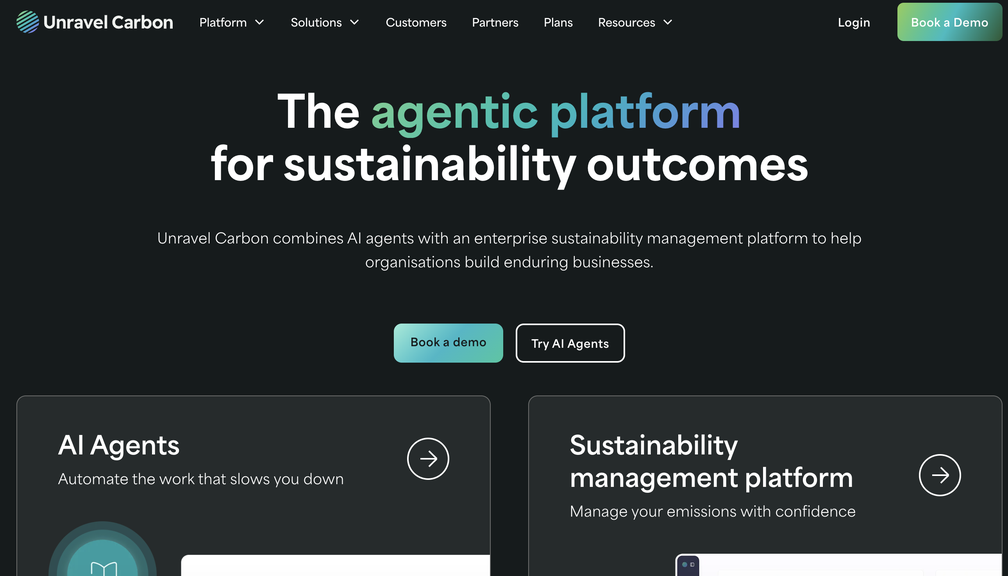
Unravel Carbon
Strong regulatory alignment, automated supplier data requests
Intensive onboarding; advanced modeling depth
Complex enterprises in Singapore and Australia
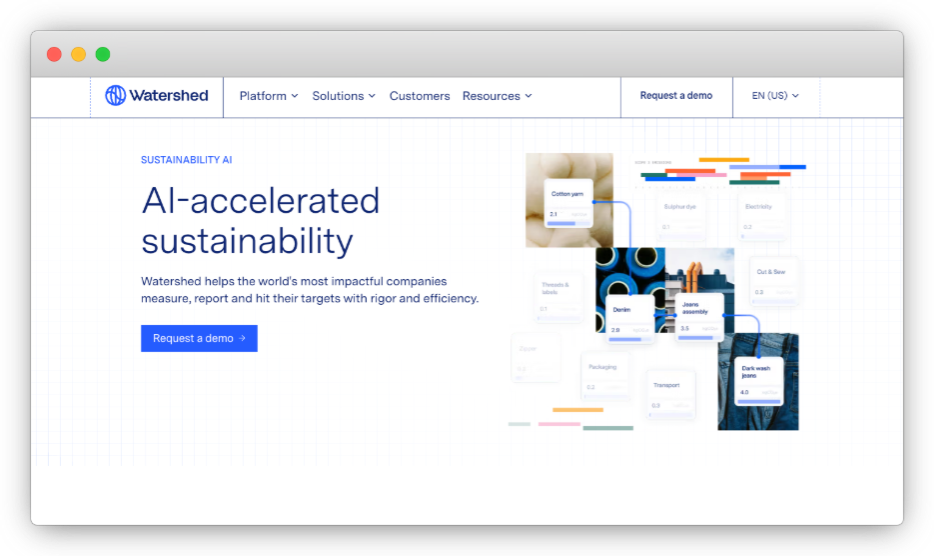
Watershed
High-quality global emissions data, strong supplier-level detail
Advanced capabilities may exceed smaller needs
Large multinational organizations requiring global supplier granularity
Overview of the Best Carbon Accounting Software in APAC
Carbon accounting in Asia-Pacific has entered a new phase. Regulatory pressure is increasing, with mandatory sustainability disclosures expanding in scope and rigor across the region. Scope 3 emissions data, once treated as optional, is now increasingly expected in external disclosures and by investors and enterprise buyers.
As a result, companies are moving from tick box ESG reporting toward audit-ready, framework-aligned disclosures that can be used to drive emissions reductions across their supply chains. Carbon accounting platforms enable companies to calculate, analyze, report, and reduce supply chain emissions at scale.
The carbon accounting landscape in Asia Pacific includes both global enterprise platforms and emerging technology providers. Each offers a different balance of regulatory alignment, Scope 3 capability, supplier engagement tools, and automation. Below, we review 10 of the leading carbon accounting platforms in the region in alphabetical order.
Measuring emissions is foundational, yet it does not, on its own, reduce them. Organizations must decide whether their chosen platform simply calculates carbon footprints or also supports supplier engagement, decarbonization planning, and long-term transition strategies.
1. Asuene
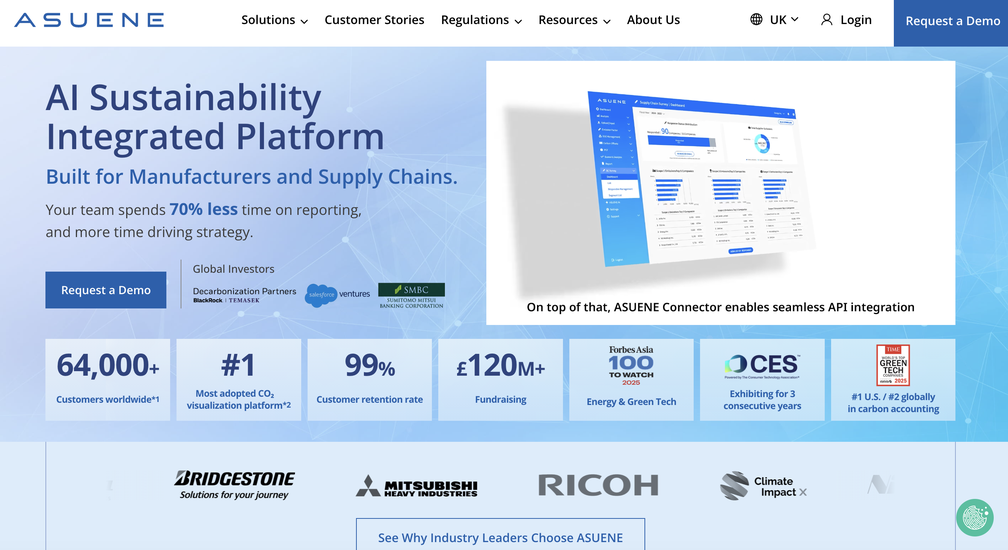
Asuene is a Japan-headquartered sustainability platform serving more than 10,000 clients globally. The company offers an integrated carbon accounting and ESG management solution designed to support corporate disclosures, supply chain emissions tracking, and decarbonization planning.
With strong adoption in Japan and expanding global presence, Asuene is positioned as a comprehensive all-in-one sustainability platform.
Core Features
Scope 1-3 emissions calculation and management
ESG data collection and supply chain management tools
SBTi, TCFD, and global disclosure framework support
Carbon credit exchange and marketplace functionality
Third-party verification and assurance services
Consulting support for target setting and regulatory alignment
Pros
Large and established client base, particularly in Japan
Combines carbon accounting with broader ESG management with broader ESG management
Offers carbon credit marketplace functionality
Includes advisory and verification support alongside software
Cons
Broad ESG scope may be more than needed for organizations seeking a focused carbon accounting solution
Enterprise orientation may limit flexibility for smaller suppliers
Best For: Large Japanese and multinational organizations seeking an integrated ESG and carbon management platform with built-in compliance support and access to a carbon credit marketplace.
2. Avarni
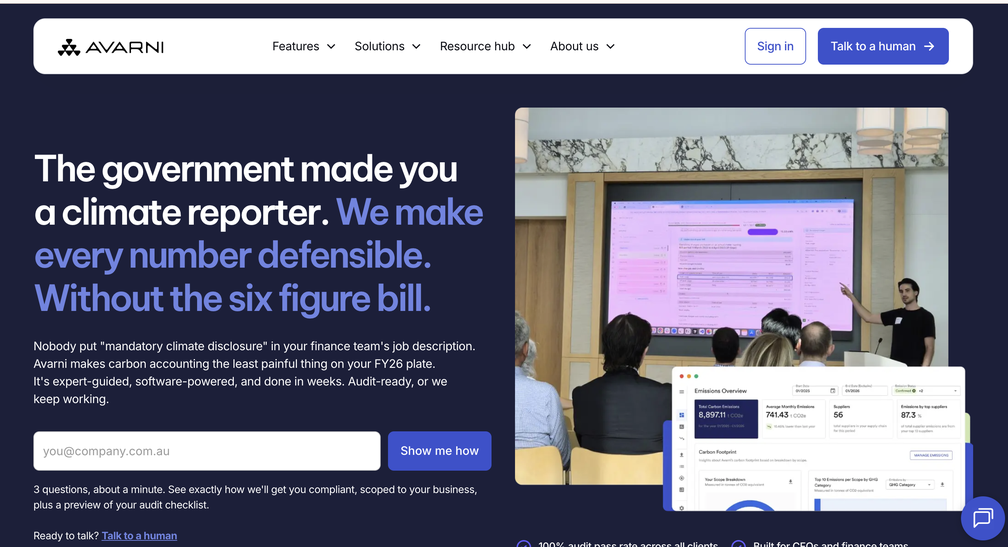
Avarni is an Australia-based enterprise carbon accounting platform designed to support complex organizations with multi-entity reporting requirements.
The platform emphasizes flexibility in data ingestion, advanced Scope 1-3 emissions calculation, and deep system integrations, making it well suited to large enterprises operating across multiple business units and geographies.
Core Features
Scope 1-3 emissions calculation with AI-powered classification and mapping
Flexible data import from spreadsheets, PDFs, and images
Integration with more than 1,000 systems, including Oracle, SAP, and Power BI
Library of 65,000+ emission factors
Target setting and scenario modeling tools
Supplier engagement and automated pre-assurance review capabilities
Pros
Strong integration depth for enterprise environments
Flexible data ingestion supports complex organizational structures
Extensive emission factor library
Designed to support consultants and multi-entity reporting
Cons
Enterprise-grade functionality may require greater implementation effort
Primarily positioned for larger organizations rather than small or early-stage suppliers
Best For: Large enterprises and consulting firms managing complex, multi-entity carbon reporting with significant integration requirements.
3. EcoVadis
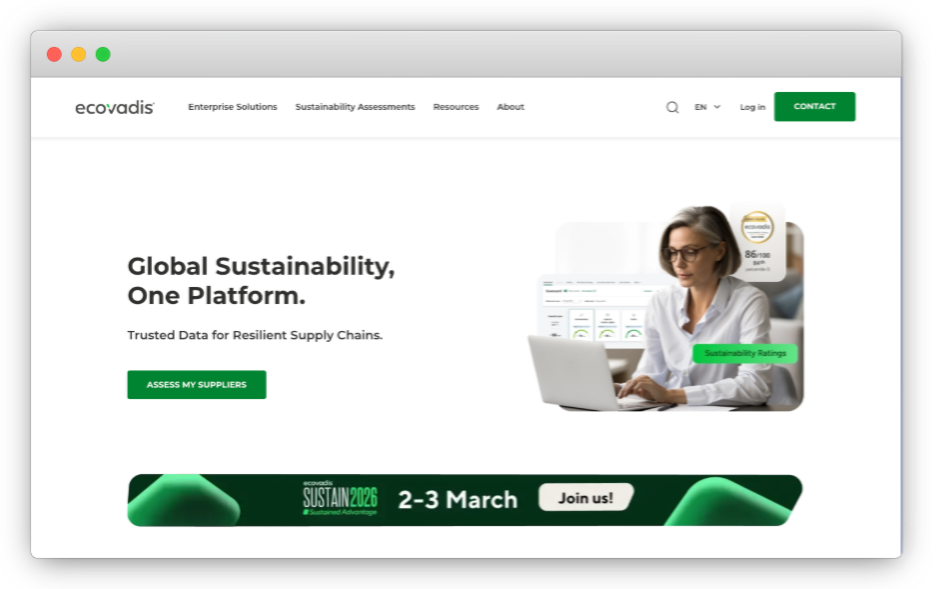
EcoVadis is a globally recognized ESG ratings and sustainability risk management platform with a strong presence in Hong Kong, Japan, and Singapore.
The company focuses on supplier sustainability assessments, ESG risk mapping, and Scope 3 carbon management, helping organizations increase transparency and accountability across their supply chains.
Core Features
ESG risk management and sustainability ratings
Supplier assessments and questionnaires
Scope 3 carbon management solutions
Risk mapping and due diligence tools
Sustainable procurement guidance
Globally recognized supplier sustainability rating system
Pros
Extensive global supplier network with more than 150,000 companies rated
Strong focus on supply chain transparency and ESG risk
Widely recognized sustainability rating framework
Established presence across key APAC markets
Cons
Primarily focused on supplier assessment and ESG ratings rather than full carbon accounting across CCF, PCF, and SCF
May require complementary tools for organizations seeking deeper decarbonization pathway modeling
Best For: Organizations prioritizing supplier ESG risk management, sustainable procurement programs, and Scope 3 transparency across large, global supply chains.
4. Green Project Technologies
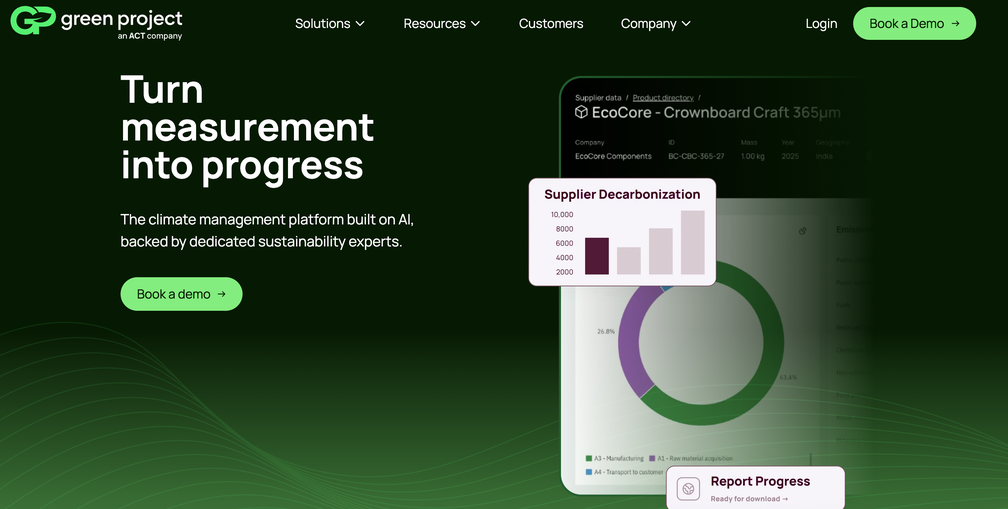
Green Project Technologies is an AI climate management platform operating across APAC and the rest of the world. Its solutions supports corporate, product, and supply chain carbon accounting and reporting while integrating structured supplier engagement and renewable energy procurement support.
The platform is designed to help enterprises move from emissions measurement to progress.
End-to-end scope may exceed the needs of organizations seeking reporting-only solutions
Supplier enablement focus may require internal coordination across procurement and sustainability teams
Best For: Organizations seeking an integrated approach to carbon accounting and supplier decarbonization, particularly those with large, diverse supplier bases requiring both measurement and renewable energy procurement support.
5. IBM Envizi
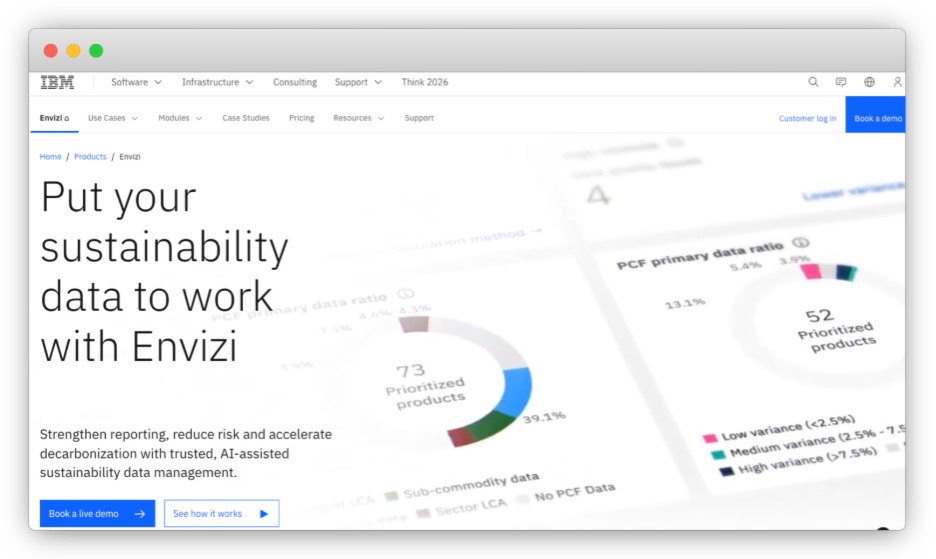
IBM Envizi is a global sustainability data management platform that originated in Australia and is now part of IBM’s broader sustainability suite. The platform provides a centralized system for capturing, managing, and reporting emissions and sustainability data across large, multinational organizations.
Envizi is designed to support complex data environments and high-volume supplier and transactional data.
Core Features
Single source of truth for emissions and sustainability data
Automated capture and processing of more than 500 data types
Envizi Emissions API with over 140,000 globally recognized emission datasets
Customizable dashboards for performance analysis and reporting
Scope 3 automation through IBM Supply Chain Intelligence module
Aggregation of supplier and product-level transactional data
Pros
Extensive global dataset coverage
Strong integration capabilities within enterprise IT environments
Designed for large-scale, multi-location operations
Broad sustainability data management beyond carbon accounting
Cons
Enterprise-scale functionality may require significant implementation resources
Broader sustainability focus may extend beyond organizations seeking a focused carbon accounting solution
Best For:Large multinational organizations requiring robust data management, high-volume supplier aggregation, and enterprise-grade sustainability reporting capabilities.
6. NetNada
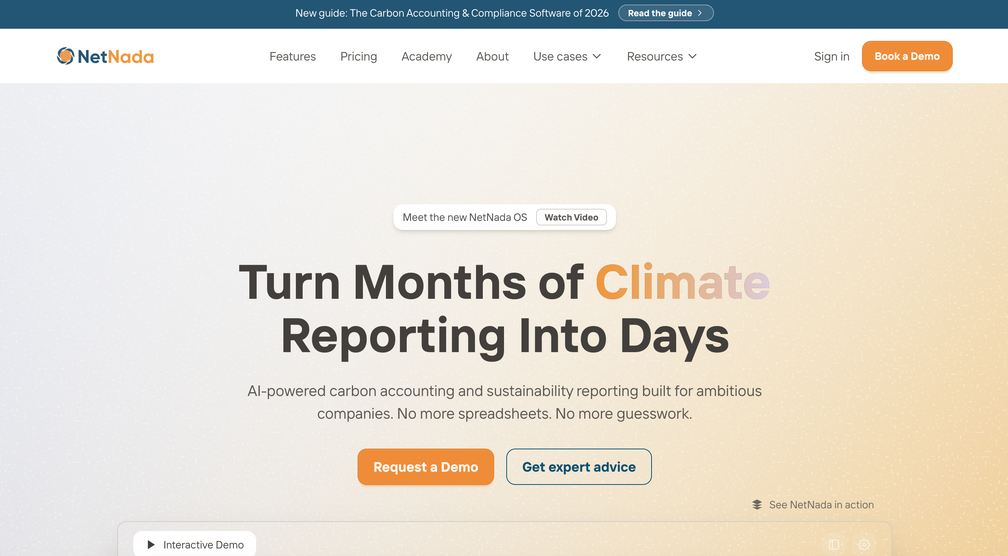
NetNada is an Australia-based carbon accounting platform recognized by the Australian government. The platform automates Scope 1-3 emissions reporting and supports compliance with NGERS and the GHG Protocol.
Designed to serve enterprises, governments, and small to medium-sized businesses, NetNada emphasizes accessibility, education, and streamlined onboarding.
Core Features
Automated Scope 1–3 emissions reporting
NGERS and GHG Protocol compliance support
AI-driven supplier benchmarking using a vetted database
One-click supplier engagement campaigns
On-demand education and expert support
Commission-free carbon offsets and carbon credit marketplace
Pros
Government recognition in Australia
Designed to support organizations of varying sizes
Built-in supplier benchmarking and campaign tools
Integrated education and carbon marketplace features
Cons
Focus on accessibility may limit advanced customization for highly complex enterprises
Emphasis on fast onboarding may not suit organizations seeking deep, bespoke integrations
Best For: Organizations in Australia seeking an accessible, compliance-aligned carbon accounting platform with supplier benchmarking and integrated education support.
7. Persefoni
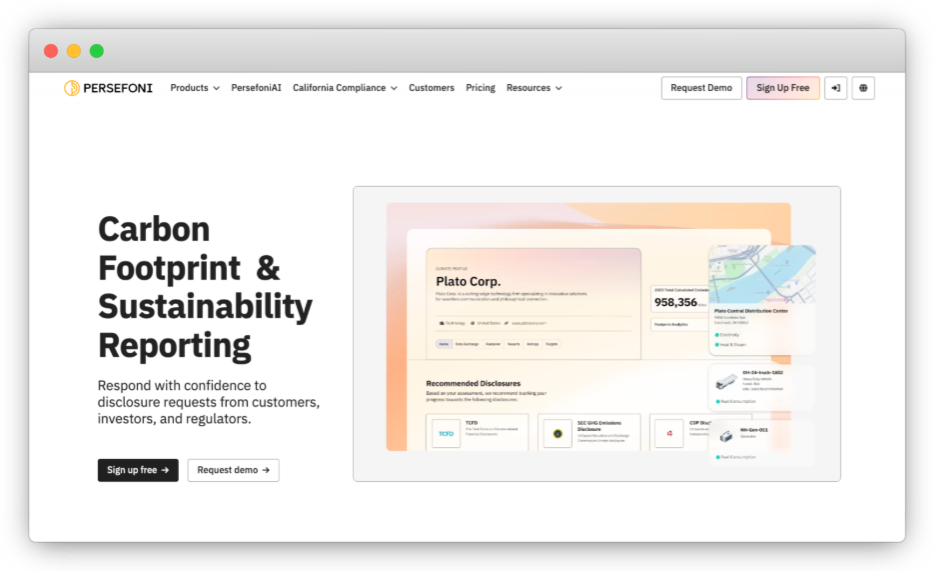
Persefoni is a global climate management and carbon accounting platform with operations across APAC, including Japan and Australia. The platform is designed to support investor-grade climate disclosures, advanced analytics, and regulatory compliance.
Persefoni serves large enterprises and financial institutions requiring detailed Scope 1-3 reporting, climate risk modeling, and target-setting tools.
Core Features
Scope 1-3 emissions calculation, including financed emissions
Net Zero Navigator for target setting and transition planning
Climate risk modeling and scenario analysis
Product carbon footprint support
Segmentation and benchmarking tools
Compliance alignment with GHG Protocol, CDP, ISSB, CSRD, and PCAF
On-demand training and premium support services
Pros
Strong alignment with investor-grade and financial reporting standards
Advanced analytics and scenario modeling capabilities
Comprehensive compliance coverage across major frameworks
Well suited for financial institutions and complex enterprise structures
Cons
Enterprise orientation may require greater internal expertise and resources
Advanced functionality may exceed the needs of early-stage or SME-focused programs
Best For: Large enterprises and financial institutions seeking detailed climate analytics, financed emissions reporting, and investor-grade compliance support.
8. Terrascope
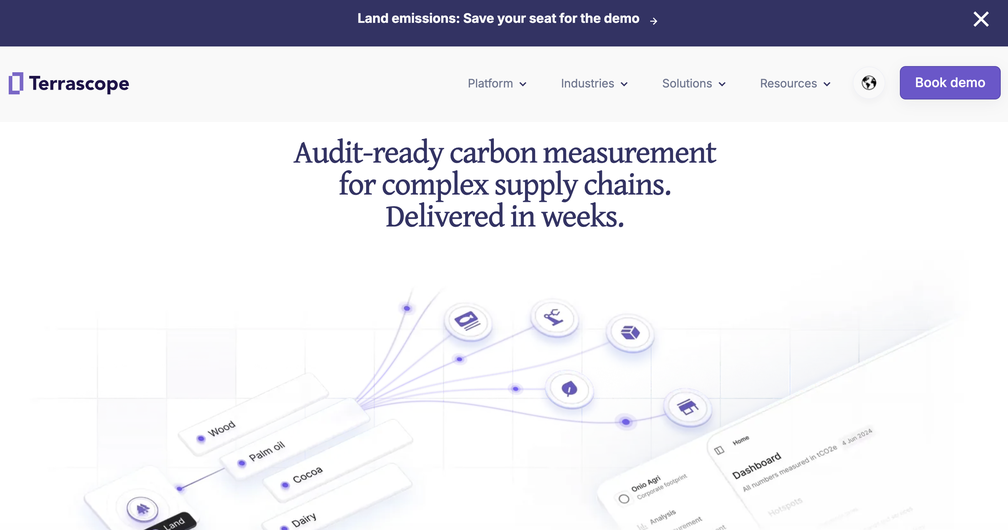
Terrascope is a Singapore-based carbon management platform expanding into Australia, focused on helping large enterprises measure, manage, and reduce emissions across complex supply chains.
The platform combines intelligent data collection, AI-powered emissions factor matching, and decarbonization planning tools, with a particular emphasis on sector-specific modules and scenario modeling.
Core Features
Scope 1-3 emissions measurement and reporting
Intelligent data collection via templates, APIs, and PDF ingestion
AI-powered emissions factor matching and data gap filling
One-click decarbonization plan generation
Driver analysis to identify emissions reduction levers
SBTi-FLAG module for land-use and agriculture-related emissions
Audit-ready documentation and compliance alignment
Pros
Strong presence in Southeast Asia and growing footprint in Australia
Scenario simulation and driver analysis capabilities
Domain-specific modules, including agriculture and land-use emissions
Designed for large enterprise supply chains
Cons
Enterprise focus may require structured implementation and internal resources
May be more robust than needed for smaller organizations seeking simplified reporting tools
Best For: Large enterprises in Southeast Asia and Australia seeking AI-driven emissions measurement, sector-specific modules, and scenario-based decarbonization planning.
9. Unravel Carbon
Unravel Carbon is a Singapore- and Australia-based carbon accounting platform built around an AI-driven sustainability workflow. The platform automates data ingestion, emissions calculation, reporting, and decarbonization pathway modeling.
Designed for complex enterprises, Unravel Carbon emphasizes regulatory alignment and supplier-specific Scope 3 recalculation capabilities.
Flexible data ingestion and integration with ERP and HR systems
Proprietary emissions factor database with 136,000+ factors
Audit-ready data management and reporting aligned with GRI, IFRS S2, and ISSB
Decarbonization pathway and scenario modeling tools
Automated supplier data requests and supplier-specific Scope 3 recalculation
Support for 70+ languages
Pros
Strong regulatory alignment for Singapore and Australia
Extensive emissions factor database
Automated supplier data collection and recalculation capabilities
Designed for multinational, multi-framework compliance
Cons
Enterprise-level functionality may require structured onboarding
Advanced modeling features may exceed the needs of organizations seeking simplified reporting tools
Best For: Complex enterprises in Singapore, Australia, and broader APAC seeking automated, multi-framework carbon accounting with supplier-specific Scope 3 recalculation and scenario modeling capabilities.
10. Watershed
Watershed is a global sustainability technology platform with a presence in Australia, supporting large enterprises with end-to-end sustainability data management.
The platform focuses on emissions measurement, forecasting, scenario planning, and regulatory reporting, underpinned by a comprehensive emissions data archive and supplier-specific factor capabilities.
Core Features
Scope 1-3 emissions measurement and reporting
Forecasting and scenario planning tools
Comprehensive Emissions Data Archive (CEDA) with 60,000 emission factors across 149 countries
Supplier-specific emission factors across approximately 140 countries
Supplier collaboration tools for communication and co-planning
Regulatory reporting support
Pros
High-quality, geographically granular emissions data
Strong supplier-specific allocation capabilities
Integrated forecasting and scenario planning
Designed for large, multinational enterprises
Cons
Enterprise orientation may require significant internal coordination and resources
Advanced data capabilities may exceed the needs of smaller organizations
Best For: Large multinational organizations seeking detailed supplier-level emissions data, scenario planning, and global regulatory reporting support.
Honorable Mentions
While the platforms above represent broad, multi-sector carbon accounting solutions operating across APAC, the following tools serve more specialized use cases and may be a strong fit for certain organizations.
Sumday
Sumday is an Australia-based carbon accounting platform designed to integrate closely with financial systems. It emphasizes treating emissions data with the same rigor as financial accounting and supports Scope 1–3 reporting through ledger-based workflows and audit-ready outputs.
Sumday is particularly well suited to SMEs and accounting-led teams seeking structured, finance-integrated carbon accounting. It is not included in the Top 10 because its focus is narrower than broader enterprise platforms and it is primarily positioned for small to mid-sized organizations rather than complex, multinational supply chains.
AIA Environmental Accounting Platform (AIA EAP)
The AIA Environmental Accounting Platform is a sector-specific carbon calculation engine developed for Australia’s primary industries. It provides standardized, science-backed emissions calculations at commodity and enterprise levels and can be integrated into partner software tools.
AIA EAP is not a full enterprise carbon accounting platform. Instead, it serves as a reference calculation engine tailored to agriculture and related sectors. For this reason, it is best viewed as a specialized tool rather than a broad carbon management solution.
What to Look for in a Carbon Accounting Platform
Choosing a carbon accounting platform in Asia-Pacific requires more than comparing feature lists. Regulatory complexity, supplier diversity, and varying levels of carbon maturity across the region mean organizations need solutions that are compliant, scalable, and built for real-world supply chains.
Here are the key factors to evaluate.
Regulatory Alignment
Regulatory expectations across APAC are tightening rapidly. Singapore, Australia, and Japan are phasing in mandatory climate disclosures, many aligned with global standards.
A strong platform should support:
ISSB and IFRS S2 reporting requirements
AASB S2 for Australian entities
GHG Protocol corporate and Scope 3 methodologies
ISO 14064 standards for greenhouse gas accounting and verification
Science Based Targets initiative (SBTi) target-setting alignment
Alignment with these frameworks ensures consistency, comparability, and audit-readiness. Platforms that are not designed around recognized standards may require additional manual work or third-party validation to meet compliance expectations.
Scope 3 & Supplier Engagement Capabilities
For many APAC organizations, Scope 3 emissions represent the majority of their footprint. Calculating emissions using spend-based factors is often a starting point, but it is rarely sufficient for long-term decarbonization.
Look for platforms that go beyond estimation and support:
Structured supplier data collection
Hybrid models combining spend and activity data
Supplier-specific emission factor allocation
Ongoing supplier engagement campaigns
Supplier engagement tools are particularly important in APAC, where supply chains often include large numbers of small and mid-sized businesses with varying levels of carbon literacy.
Platforms that help suppliers understand expectations, submit data, and identify reduction opportunities can accelerate progress beyond reporting alone.
Integration & Data Automation
Carbon accounting can quickly become resource-intensive if data must be collected manually across multiple systems.
Leading platforms offer:
Integration with ERP and finance systems such as SAP, Oracle, NetSuite, and Xero
Access to large, regularly updated emission factor libraries
AI-assisted data ingestion and classification
Automated anomaly detection and audit trails
Automation reduces reporting burden, improves accuracy, and enables sustainability teams to focus on analysis and action rather than data wrangling.
Decarbonization & Action Enablement
Many platforms focus primarily on carbon accounting and disclosure. While reporting is essential for compliance, organizations increasingly need tools that translate emissions data into actionable reduction strategies, particularly across complex supply chains.
When evaluating platforms, consider whether they support:
Scenario modeling and reduction pathway analysis
Target setting aligned with SBTi or net-zero frameworks
Identification of emissions hotspots and cost-impact tradeoffs
Supplier-level decarbonization planning tools
Renewable energy sourcing pathways, including energy attribute certificates
In APAC, supplier engagement is often the difference between reporting progress and achieving real reductions. Platforms that provide structured campaigns, curated decarbonization initiatives, and practical guidance can help suppliers move from awareness to execution.
As regulatory scrutiny increases and investors focus on credible transition plans, action enablement is becoming as important as audit-ready reporting.
From Measurement to Meaningful Reduction in APAC
No single platform is right for every organization. The best solution for your organization depends on regulatory exposure, internal data capabilities, and where suppliers sit on the carbon maturity ladder.
Platforms that combine carbon accounting with supplier enablement and actionable decarbonization pathways are increasingly positioned to support this next phase.
If you are evaluating carbon accounting platforms in APAC, start by assessing where your organization and suppliers are today, and select a platform that supports not only reporting requirements, but meaningful emissions reduction over time.
About the author
Mat Langley
Advisor
Mat Langley is an advisor to Green Project Technologies, an AI climate management platform helping businesses of all sizes measure, manage, and reduce emissions across complex global value chains.